Safety First: Sanctuary Protocols
By Morgan Kelly
Chimps may be cute, but they’re also strong. It’s dangerous to keep them as pets or house them without proper safety measures. We’re committed to keeping both the chimps and their caregivers safe. That’s why we have so many safety protocols during feeding time, positive reinforcement training, check-ups, and all around the clock, really.
Safety First for Bite Force
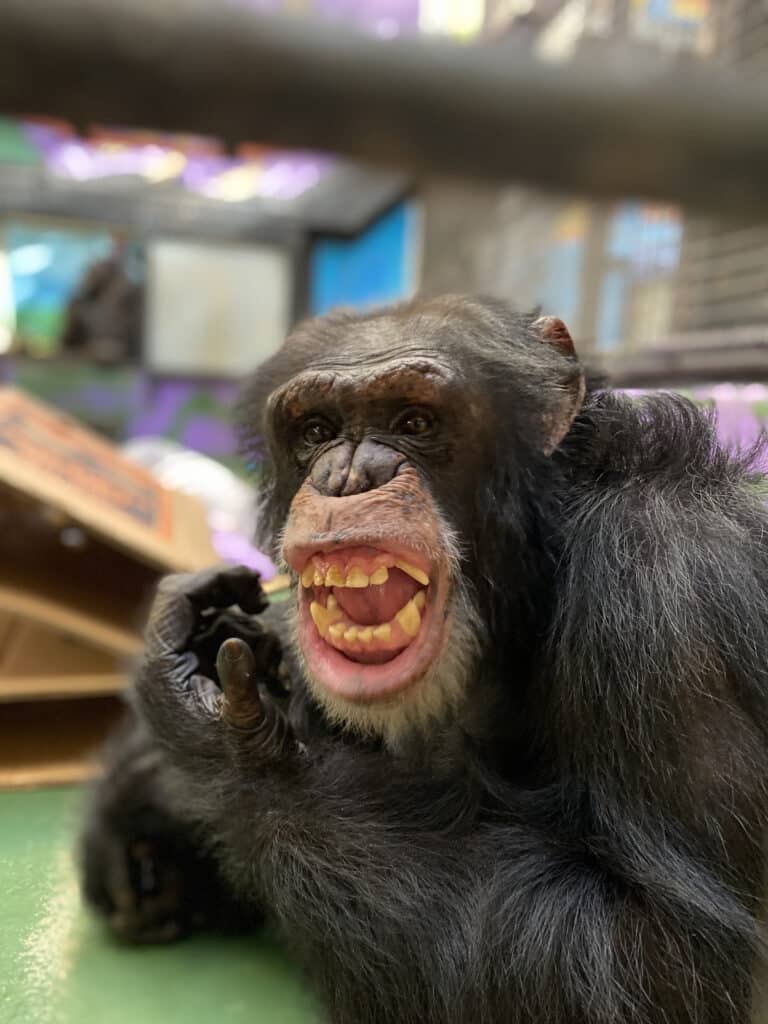
Chimps have a strong bite force. They bite with pressure around 1300 PSI. This means that a chimp could bite down on one inch of area with 1,300 lbs of pressure. That would be like dropping a whole cow on your toe! Because the chimps are so strong, we all need to be extra careful during feeding times.
We train our care staff to make sure they stay safe when feeding the chimps. There are two main ways to serve meals: breakfast and dinner. Care staff feeds each chimpanzee their meals using food chutes (hoppers). Think of a food chute as a small slide. Food goes in one end and comes out the other. This way staff can feed the chimps without worrying that their finger might be mistaken for a tasty carrot.
Feeding through food chutes ensures each chimp gets enough vitamins, fiber, protein, and carbs. It also minimizes physical contact between staff and the chimps, helping ensure a safety first mentality for both.
Do It the Old-Fashioned Way
Some of the chimps here are suspicious of food chutes, though. We have a few different methods for feeding those select few. Sometimes, we cut up produce into small, hockey-puck-sized pieces and slip them through a gap in the floor. The gap is usually too small for any primate to stick their fingers through, so it’s another safe method for staff.
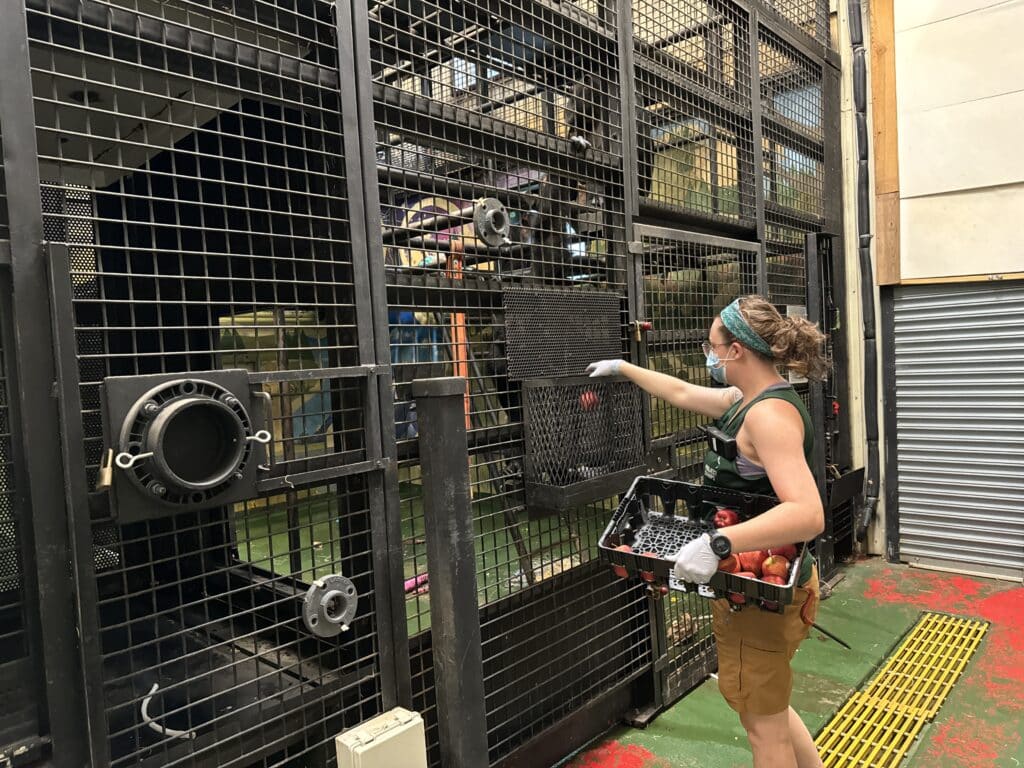
Another way we might feed hopper-hesitant chimps is directly through the mesh barrier. Even through the mesh, chimps can grab onto things with their long fingers. So, it’s safer to pass the food directly into the chimps’ mouths.
Chow-burritos, anyone? A fun way to feed chimps who don’t like to use the hopper or food chutes is with chow-burritos. Chow-burritos combine all of the chimps’ nutrients into one big roll.
The chimps get their lunches via forage or “buffet” style. Staff scatters produce and forage across the chimps’ habitat prior to their occupation of those spaces.
When everything is set up, the chimps can search for their food like they would in the wild. This free-for-all can lead to some conflicts in groups. Luckily, some of the chimps like to share their food. They may be more inclined to give their food to a friend who may have received less than them.
Safety during feeding time is important. However, it’s also important that we stay safe during all interactions with the chimps.
Safety Lines
Our care staff and volunteers who have close contact with the chimps undergo extensive training for all their interactions.
Safety lines around the sanctuary mark borders that the care staff cannot cross, safety training allows staff to maintain a safe distance from the chimps while doing their jobs, and staff knows to be careful of the safety lines when working in the sanctuary.
But, when mistakes happen, everyone does their best to hold each other accountable. If an employee or volunteer notices someone accidentally crossing the safety line, they always point it out with the goal of keeping each other safe!
Stay Alert, Don’t Get Hurt
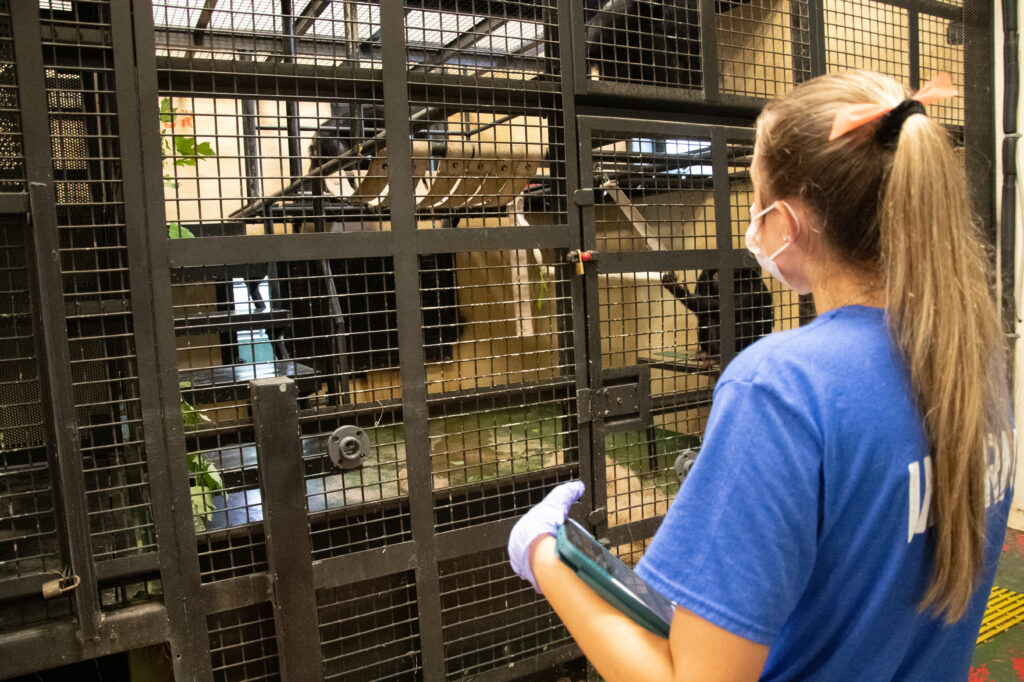
Highly-trained employees can pass safety lines under certain circumstances. For example, staff members who feed the chimps by hand have to get really close to the safety mesh so they can place the food directly into the chimp’s mouth.
Staff needs to be constantly aware of their surroundings. People working in the villas know not to distract the highly-trained staff when they’re feeding the chimps or giving physical exams. All attention needs to be focused on the chimps and their body language. If someone isn’t paying attention, they might not realize when a chimp is growing frustrated.
Chimps express their frustration like some other wild animals. They may get into physical fights with each other or start to throw a tantrum. Their strength can make these episodes especially unsafe for humans. This is why it’s so important to give them space to go wild.
Safety First, Avoid the Worst
We need to remember that chimps are meant to live in the wild. They weren’t raised with the same table manners we were, but we want them to live a life as close to normal for them as possible. At Project Chimps, our protocols prioritize safety first for both chimp and human alike. This way, the chimps can live like they would in the wild. But we can all stay safe while they do!