Does Chimpanzee Hair Change with the Seasons?
By Lauren Vogel
As winter rolls in, we humans bundle up in coats, hats, and scarves to fight off the chill. Many mammals do something similar—though in their own way. Ever notice your dog shedding less in winter? That’s because their fur thickens to trap heat. But what about chimpanzees? Do they grow a winter coat?
The Short Answer: Not really. While chimpanzee hair helps keep them warm, it doesn’t grow thicker for the cold like some of their furry relatives.
Chimpanzee Hair: What’s the Deal?
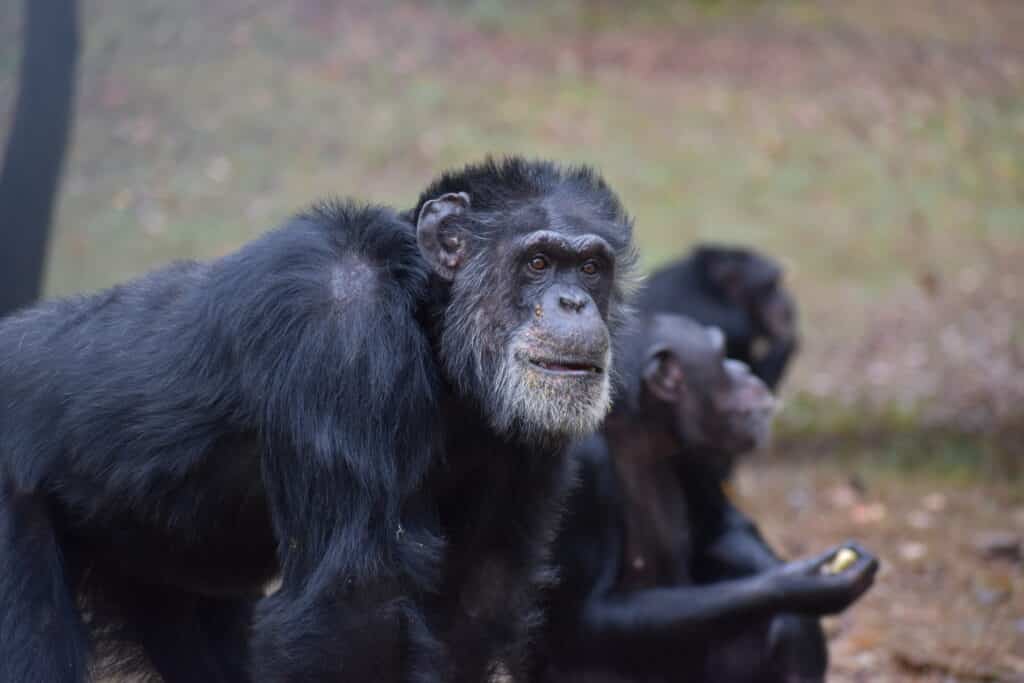
Chimps are covered in black or brown hair everywhere except their palms, soles, and faces. Surprisingly, humans have the same density of hair follicles—the difference is that ours are much finer (Brown 2021; Yesudian 2011). Chimps’ hair is thicker but stops growing at a certain length because their follicles have a shorter active growth phase. That’s why chimps never need a haircut!
Like all mammals, their hair follows the same cycle:
- Anagen: Growth phase
- Catagen: Transition phase
- Telogen: Shedding phase
These phases aren’t synchronized, so individual hairs shed and regrow at different times (Miller 1931).
Their coat provides insulation, protection, and even sensory input. It helps retain heat during cooler periods, shields skin from sun and insects, and can fluff up (piloerection) to trap air for warmth or make them look bigger to scare predators (Chaplin et al. 2013).
Seasonal Changes: Fuzzy Winters or Tropical Tresses?
Unlike Japanese macaques, which grow thick winter coats and shed in summer (Inagaki & Nigi 1988), chimps don’t go through dramatic seasonal molts. Any changes are subtle—you won’t see a shaggy winter chimp or a bare summer one. Living near the equator means they rarely face extreme seasonal temperature swings, so evolution didn’t favor big coat changes.
That said, chimps in savanna habitats can experience heat stress (Max Planck Institute 2018). Instead of shedding fur, they rely on behavior: hiding in caves, being active at night, or cooling off in water.
What About Captive Chimps?
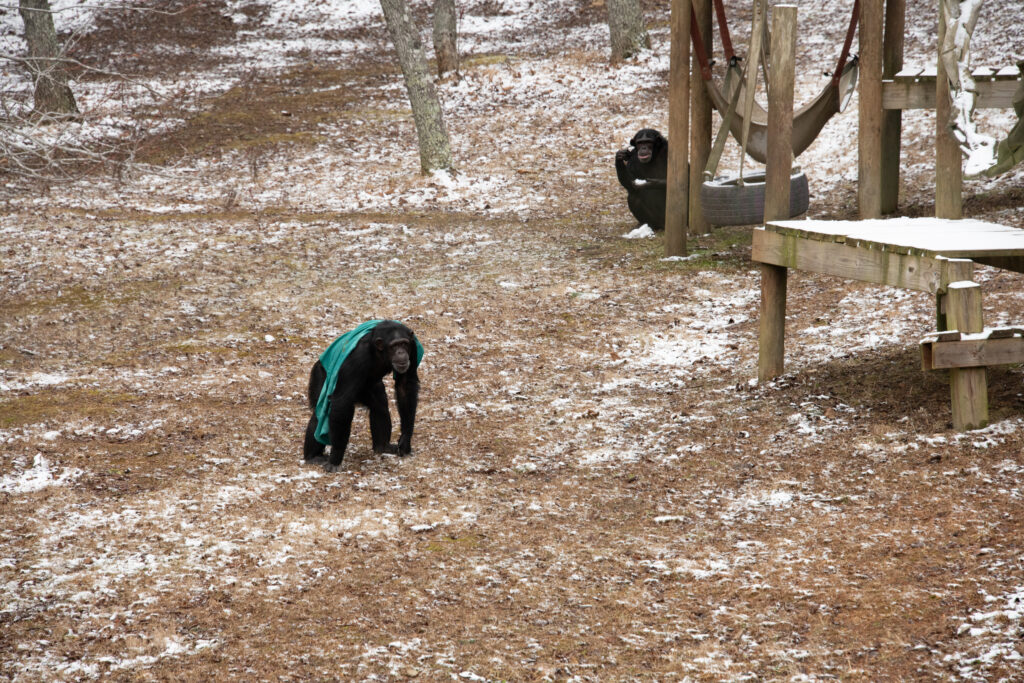
In zoos, chimps often live in climate-controlled environments, which blurs natural seasonal cues (Carlitz et al. 2015). At Project Chimps, they can move freely indoors and outdoors, plus they have blankets! Panielle, a 25-year-old female, is famous for carrying her blanket like a cape—or even tying it to a stick as a flag.

Every chimp is different. Some sit outside in the cold; others curl up indoors with a blanket. Chimps in temperate regions might grow slightly thicker hair in cooler months, but it’s barely noticeable (Gauvin & Cooper 2018). Caregivers focus on heating and blankets rather than relying on seasonal coat changes.
The Bottom Line
Chimpanzees don’t grow thick winter coats like other primates. Their hair growth stays steady year-round, thanks to their tropical origins. Instead of seasonal shedding, they adapt through behavior—finding shade on hot days or huddling together when it’s cold. Their coats, combined with their intelligence, keep them comfortable in all kinds of weather.
So, while chimps may not change their coats with the seasons, they’ve mastered the art of staying cozy in their own skin—and hair—all year long. You can help by sending warm cozy gifts like blankets from our wishlist!