Project Chimps – A Beacon of Hope
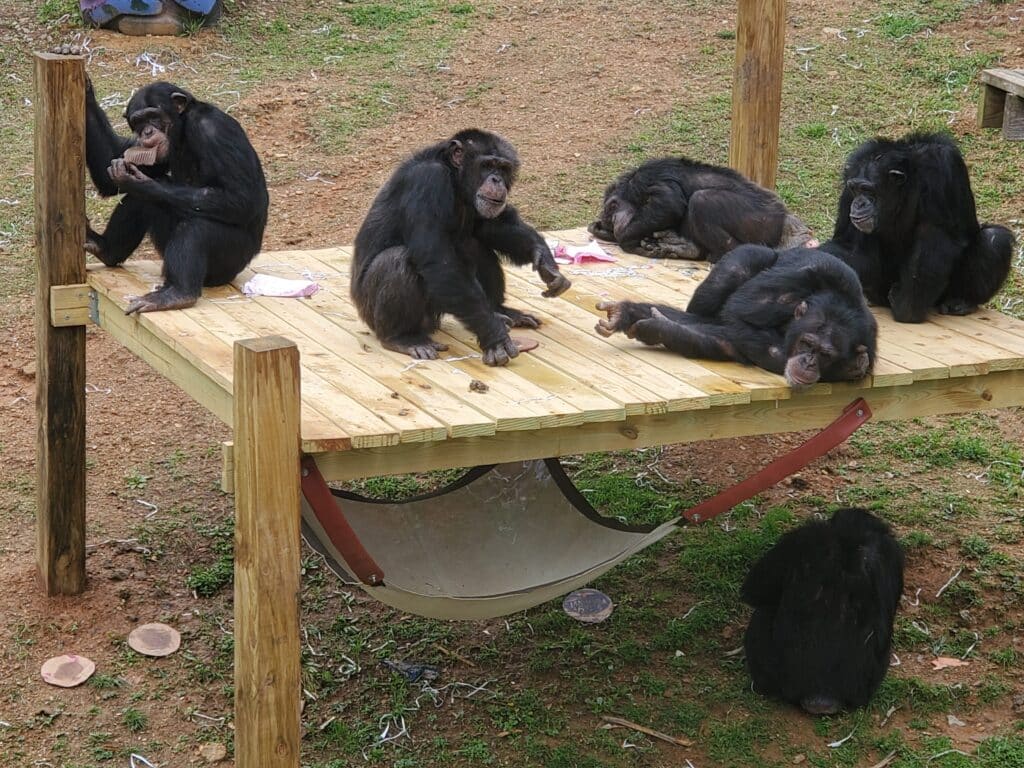
By Alyssa Burlison
The thoughts racing through my mind felt like hundreds of tight, tiny knots before my visit to Project Chimps. As I stepped onto the plane to Chattanooga, I carried the weight of a recent loss. My dog had just been diagnosed with cancer, and potential changes to the Marine Mammal Protection Act made me feel as though my dream of working in conservation might be slipping away. I tried to fight the thought that no one truly cares about the environment anymore. Prices have gotten too high. People can’t justify the energy it takes to be sustainable.
Nevertheless, I boarded my flight. For the past few months, I had been a remote communications intern for Project Chimps. My job included virtual calls where I interviewed staff and volunteers about the sanctuary. With each call, I always asked people about their favorite chimp. I remained fascinated by their individual personalities and their ability to connect with people. It was finally my turn to meet them. My weekend was all planned out: I would learn about the chimps, write about them, and even film social media content. Beyond work, my life at home had become too heavy. I couldn’t wait for an escape in the cozy on-site Airbnb, surrounded by pine trees and pristine mountain views.
First Impressions: Nature’s Embrace
My car pulled into the sanctuary just before sunset. A huge Project Chimps sign welcomed me in, followed by another sign featuring almost all of the great apes (no humans). The Airbnb looked like a quaint log cabin and sat just in front of a few trailheads and a koi pond. I should add that the koi pond was filled with rescued koi fish! As I looked around, I was sure I had stepped into a postcard.
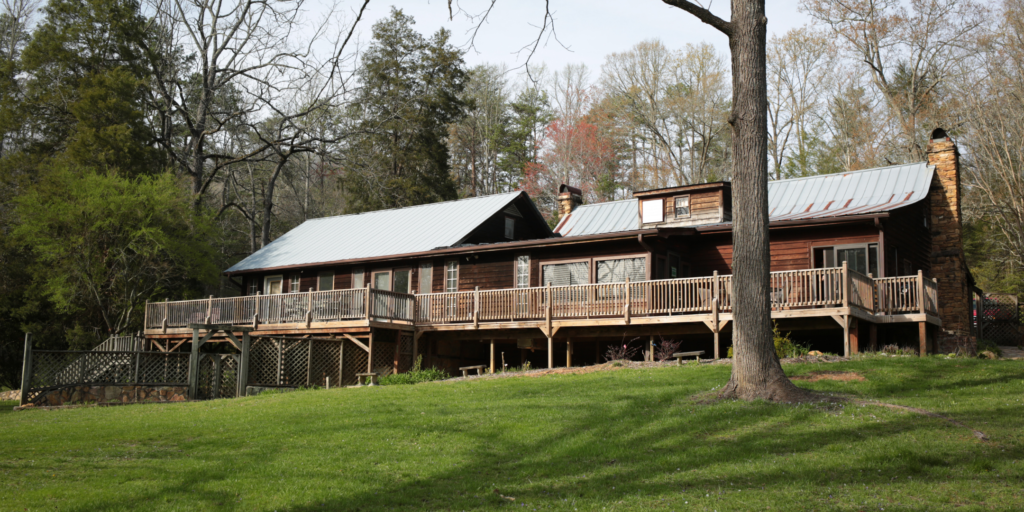
Once I stepped into the room, my heart fluttered. The bedding was patterned with palm leaves, and on the nightstand rested a chimp lamp and a magazine with Jane Goodall on the cover. This place was built for nature lovers. I felt right at home—and exhausted. Although the drive through the Chattahoochee National Forest was stunning and relaxing, it had lulled me into an early bedtime. I wasted no time rinsing off, diving into bed, and drifting off to sleep.
Sunrise and Solitude
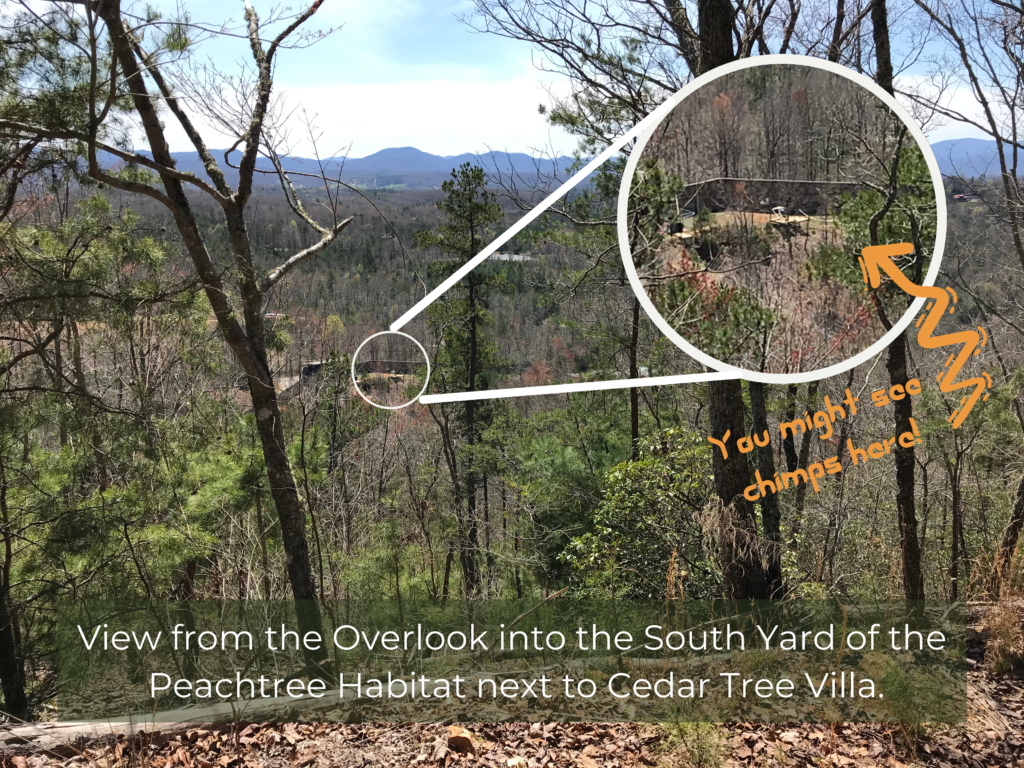
The next morning, my alarm went off just before sunrise. I hopped out of bed, simmering with excitement. With nothing scheduled until the afternoon, I threw on my workout clothes and headed to the trails. Luckily, a map of the trails had been provided on my nightstand. Two of these trails boasted a lookout point where you could spot the chimps.
As I stepped outside, the brisk mountain air greeted me with a chilly embrace. Coming from a humid Texas summer, this weather was a welcome change. As I walked toward the trailhead, the morning dew clinging to the grass soaked through my socks. It seemed to root me to my surroundings. I felt the once-tangled knots in my head begin to loosen as I kept walking.
Big trail markers guided me through the paths. They were all well-kept—by Project Chimps volunteers, I might add. I never felt lost or turned around. I just had to follow the trails and focus on the beauty that surrounded me. As I ventured deeper into the woods, I could occasionally hear the chimps hollering. Each yell tugged at my heartstrings and urged me back to the sanctuary. I couldn’t help but laugh at the thought of an unsuspecting hiker mistaking those sounds for the cries of a monstrous creature from the Appalachian Mountains instead of a retired chimpanzee.
Once I reached the lookout, I could see the sun peeking out through thousands of trees as it rose. Despite the scenic view, I had to bury my disappointment—I couldn’t see any chimps from the lookout point. I heard one yelling. “I’ll see them soon,” I told myself, allowing the anticipation to build even more as I made my way down the trail.
Meeting the Chimps
I rushed back for my tour, skipping a shower to make it in time. There waited a volunteer in a bright purple shirt and banana earrings: my tour guide. As we walked toward the sanctuary, I learned I wasn’t the only new arrival at Project Chimps. Just three days before my visit, six new boys had come to the sanctuary.
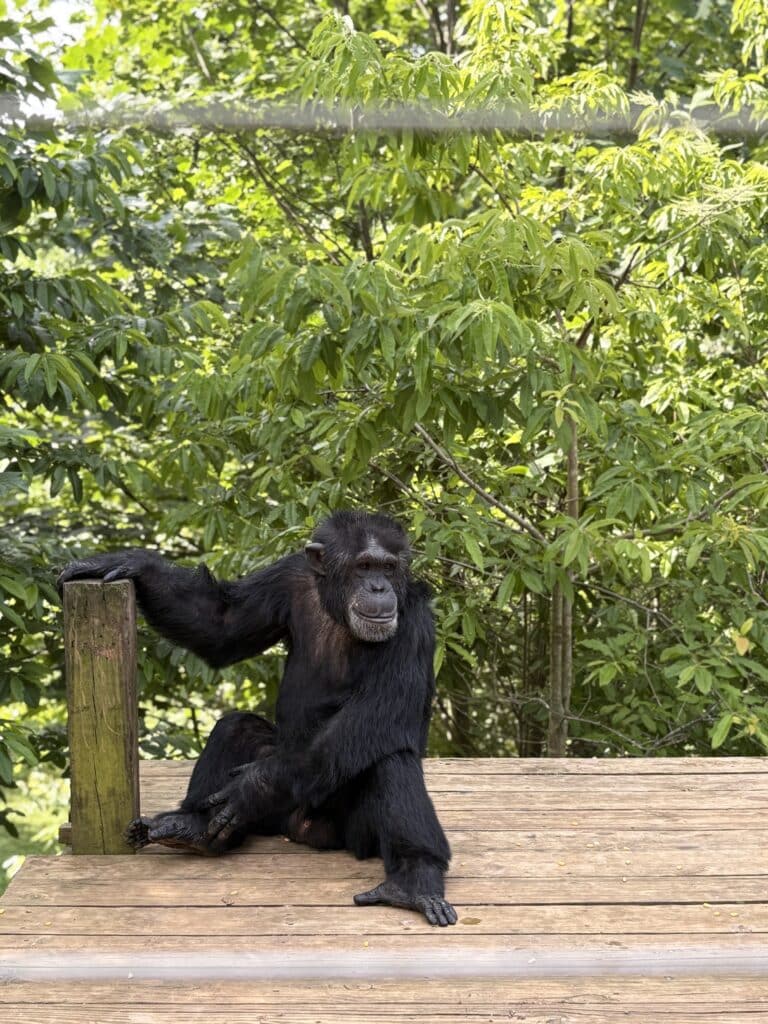
We walked past various habitats, and she told me about each chimpanzee and their unique personalities. I loved how she spoke about them, as if they were her younger cousins.
“Luke lives here,” she said as we approached another habitat. “He doesn’t like the texture of wet grass.” I laughed at the thought, reminiscing about how my socks had gotten soaked just hours before on my hike.
As we continued down the trail, we passed the state-of-the-art kitchen where the chimps’ food is prepared. “This was funded by Rachael Ray,” she quipped.
At another habitat, the volunteer stopped, and we looked through the window. “This is where the new boys are,” she explained. “They went outside for the first time yesterday.”
My stomach sank at the thought. I couldn’t imagine a life confined indoors, especially for animals that should be in the wild.
“They were nervous at first, but they came around,” she said, continuing to walk. I looked inside for a moment, trying to catch a glimpse of them.
A Place to Simply Be
The rest of my day was spent chatting with different people at the sanctuary. There was an excitement in the air, something comparable to the thrill of Christmas. The entire staff was buzzing about the arrival of the new boys, and everyone was whispering about how well they were adjusting.
That evening, I sat on the porch with a Lean Cuisine, listening to the chimps call to one another. In that moment, I understood the magic of this place. These animals—once confined, studied, and silenced—now had a home where they could simply be chimps. No expectations. No experiments. Just freedom.
Finding Hope Again
The tiny knots of anxiety that had plagued me at the airport began to dissolve as I found a moment of peace, listening to the happy chimps. Thanks to the wonderful people at Project Chimps, I now see hope for our environment. If retired chimps can find a home in Georgia through the passion, grit, and courage of amazing individuals, then—despite the loss and uncertainty in the world—there is always hope.