
Project Chimps Blog
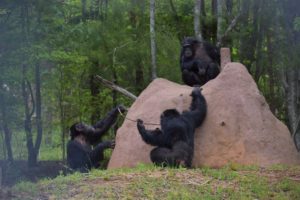
Do chimps eat insects?
By Ali Crumpacker |
In the wild 2% of a chimp’s diet is made up of animal protein, and the majority of that is bugs! These chimps seem a lot less inclined to eat insects the way their wild cousins do. At least for now.
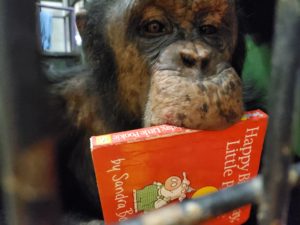
Leo-land
By Ali Crumpacker |
Leo has been a special chimp from the beginning, and we have been helping him cope with mental episodes. Leo has made significant improvements since he has arrived at the sanctuary and continues to thrive.
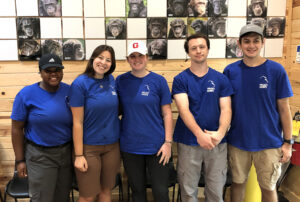
Chimps’ intelligence stands out for interns
By Ali Crumpacker |
When Victoria Washington reflects on her summer internship at Project Chimps, chimpanzee intelligence stands out the most. “They are really smart, especially when it comes to trading and using tools,” said the recent graduate of Auburn University. “I was really excited to get to see that in person. I think that was the most amazing…
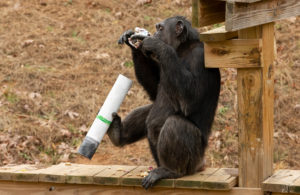
Creator of the BOT (Behavior Observational Tool) – Eric Simonton
By Ali Crumpacker |
Eric Simonton developed the BOT several years ago. It’s actually an incredibly humorous and somewhat cosmic story.
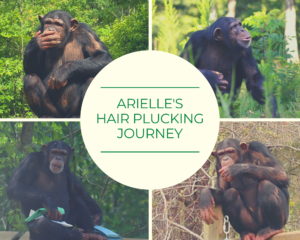
A Hair Plucking Journey
By Ali Crumpacker |
Behavior Coordinator Kate has spent many hours observing when Arielle plucks her hair. Once she understood when the behavior happened the most, she was able to come up with some solutions. Thanks to Kate, Arielle has stopped plucking and her hair has grown back!
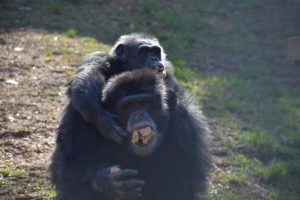
A Chimp’s Guide to Stealing Food
By Ali Crumpacker |
Stealing food is a strategic business in the chimp world. While it may sound like a simple interaction, there are actually many reasons why chimps steal food – and no, it is not just because they are hungry. Here is a chimp’s guide to stealing food while keeping a clean slate.
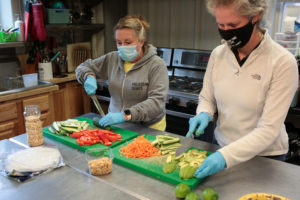
Chimp Diets – What’s on the Menu at Project Chimps?
By Ali Crumpacker |
Just like humans, chimpanzees have their own unique dietary needs and preferences. For example, you will probably try in vain to get a chimp to eat foods such as kiwi, squash, kale, and green beans. But you will be very popular if you present favorites such as onions, eggplant, sweet potatoes, apples, and bananas.

Ode to the Onion – Chimps Love Onions
By Ali Crumpacker |
Chimpanzees’ eating habits are determined based off of their social rank. When observing chimpanzee foraging customs, it helps us learn more about their mannerisms.
The BOT Tool to Track Abnormal Behaviors
By Ali Crumpacker |
Kate’s job as Behavior Coordinator at Project Chimps is to observe and assess chimp behavior as well as run the Positive Reinforcement behavioral training program. Kate closely with the chimpanzees and caretakers to monitor the well-being of the chimps and determine whether or not there are any signs of abnormal behavior
Abnormal Behavior in Chimpanzees
By Ali Crumpacker |
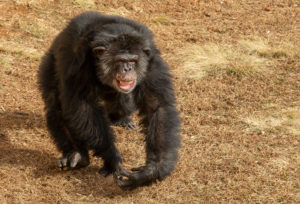
One way sanctuaries and zoos gauge a chimp’s emotional and physical well-being is to look for signs of abnormal behavior. Abnormal or atypical behaviors are scientific terms that describe behaviors that are often indicative of stress.

Safety Drills are Fun n’ Games
By Ali Crumpacker |
June is National Safety Month. At Project Chimps, we use safety drills to prepare for scenarios that we hope will never actually happen. And, while these hypothetical scenarios are serious, we do our best to make the drills fun!
Sunbathing like a chimp – yes, they do get tan!
By Ali Crumpacker |
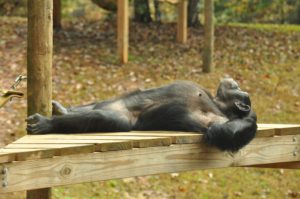
Chimps are extremely similar to humans. They may look different, but we share many similar mannerisms, including sunbathing. Learn more about our similarities with chimpanzees.

Spit and Spatter
By Ali Crumpacker |
A well-known behavior of chimpanzees is their act of spitting and, you guessed it – throwing poop. But why do they spit and spatter?
Triggs honors ‘Jane and Flint’ with mural
By Ali Crumpacker |
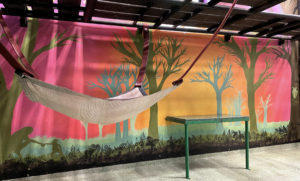
Nell Triggs combined fond childhood memories with her professional career in her mural “Jane and Flint” inside a Project Chimps villa.
Topical Wound Therapy for Chimps
By Ali Crumpacker |
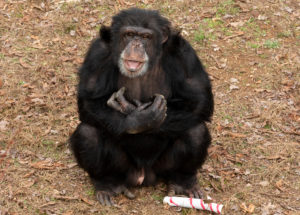
With antibiotic resistance on the rise, it is more important than ever to use drug therapy wisely. Chimpanzees have amazing powers to heal, out in the wild wounds would have to take care of themselves. But Collin is not in the wild, he is under our care at Project Chimps.