

Chimpanzees and Their Wild Ways of Grubbing
By Des Jean’ae
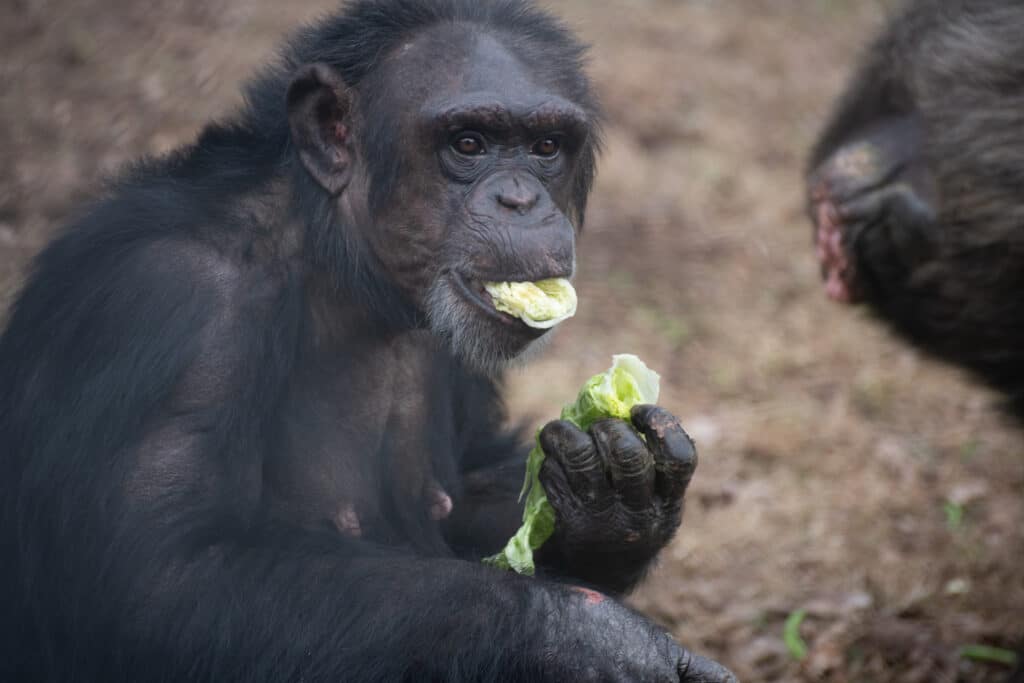
In the big, wide world—whether swinging through trees or lounging in leafy shade—chimpanzees have one mission: find grub to grow big and strong. These clever primates are masters of survival, known for their ability to hunt, forage, and craft tools to catch their next meal.
What’s on the Menu?
In the wild, chimpanzees spend their days foraging for ripe fruits, cracking nuts with rocks, and fishing for termites and ants using handmade tools from branches and blades of grass. And yes—chimps love honey! It’s a sticky, sweet snack they’ll go to great lengths to enjoy.
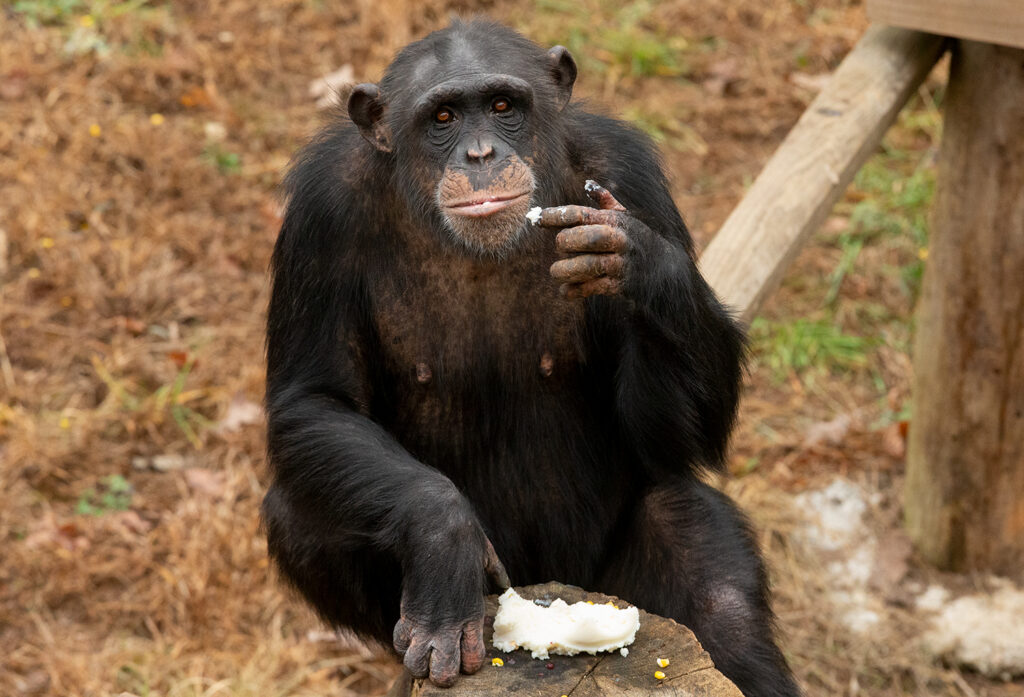
Did you know some chimpanzees eat up to 200 different kinds of foods? Like humans, chimps are omnivores. Their diet includes:
- Ripe fruits (their favorite!)
- Insects like ants and termites
- Roots and flowers
- Nuts and even small amounts of meat
One particularly talented chimp named Kareem can fit four kiwis in his mouth at once—no forks or spoons needed!
Smart Grubbers
Chimpanzees are very adaptable and resourceful. They usually live in different tropical climates in West and Central Africa but can adapt to thick rainforests and dry woodlands. Chimpanzees consist of communities of about 15-150 members depending on the population. They hunt for food in smaller groups that often change throughout the day. As an alpha, some chimpanzees like Kareem focus on making sure their community is fed and well-nourished before digging in.
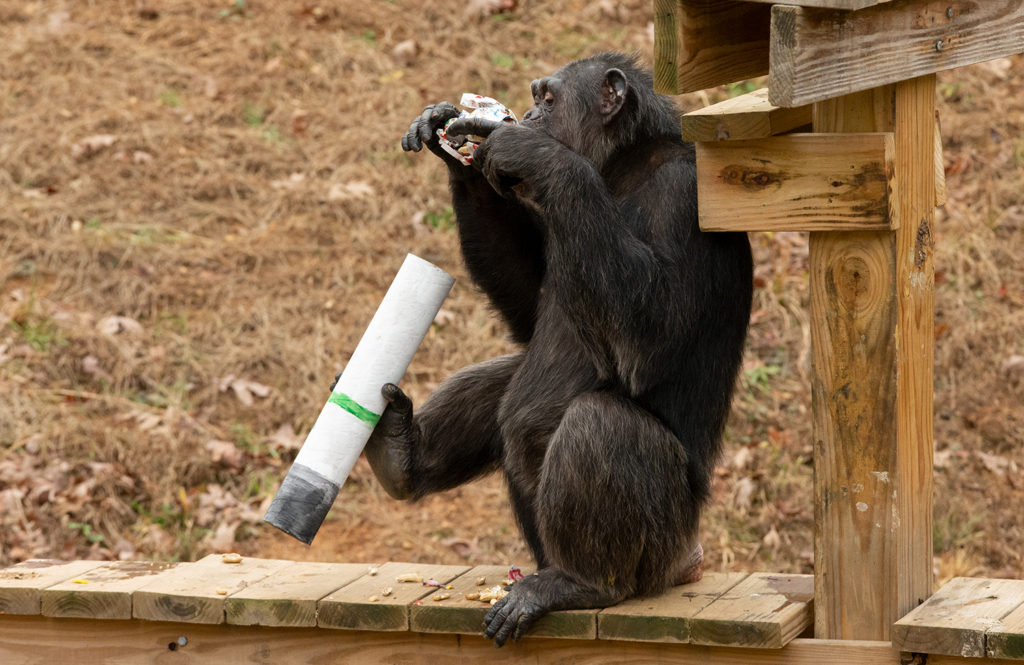
Chimpanzees don’t just eat—they problem-solve. At Project Chimps, they’re given puzzles to enhance their foraging skills. These brainy challenges help them stay sharp while earning their meals. The chimps enjoy three large meals a day, plus snacks, and are free to catch their own insects when they spend time outside. Chimpanzees will create tools from branches, blades of grass and rocks to catch insects, like termites and ant, and to crack open nuts.
Nature’s Medicine Cabinet
Chimpanzees are surprisingly resourceful when it comes to health. They use certain plants to soothe wounds or fight off parasites. While they don’t always know exactly what they’re eating, researchers have found that chimps instinctively turn to nature’s pharmacy when they’re feeling under the weather.
Growing Up Chimp
Baby chimpanzees—called infants—spend their first year snuggled close to their mothers. Typically, a female chimp gives birth to one baby at a time. From ages four to six, young chimps rely mostly on milk and learn essential life skills by shadowing their moms. (As a sanctuary, we do not intend to have any babies here!)
As male chimps grow into adolescence, they begin to learn how to hunt and patrol their territory, guided by adult males in their community.
In the wild, chimpanzees usually live till around 60 years old. On holidays or birthdays at Project Chimps, residents are given special treats like peanut butter and oats, peanuts and mixed nuts, sunflower seeds, juice, cereal, corn, and other special treats they like to grub on.
Des Jean’ae is a 2025 Communications Intern
Resources: