How Chimpanzees Use Tools
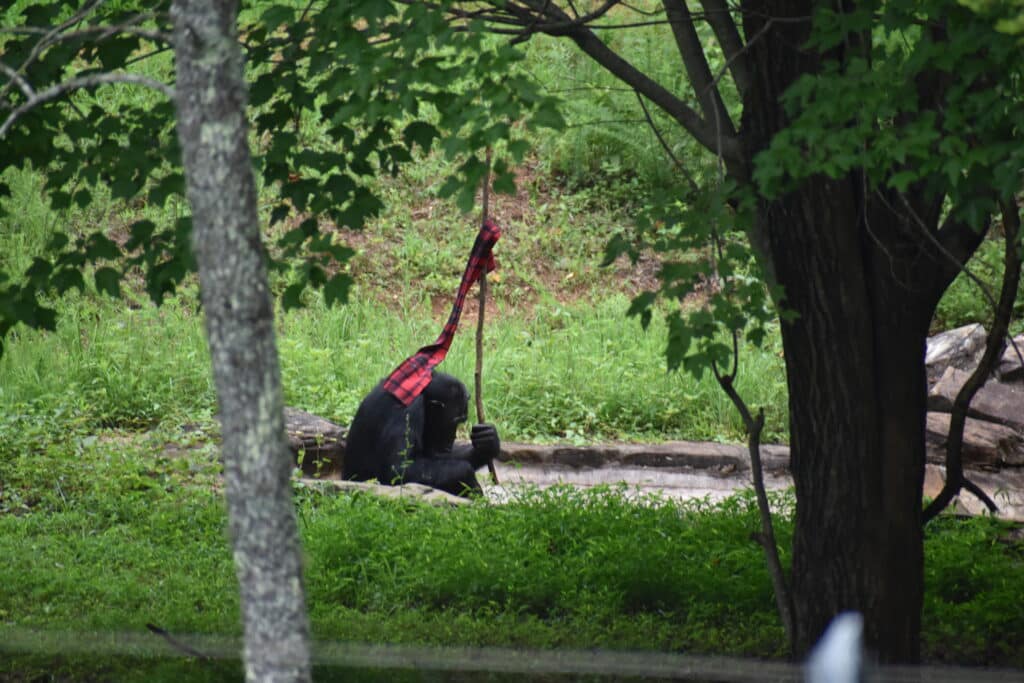
If you have ever gone on a tour or looked through a designated viewing area at Project Chimps, you may have seen the former research chimpanzees using sticks to fish for treats inside the mock termite mounds. This is a classic example of chimpanzee tool usage, but it goes way deeper than that.
Out in the wild, chimpanzee tool use is necessary for their survival. It’s the same for humans and other primates as well. And just like us, chimpanzees have different cultures and tool usage depending on where they live. Different places require different innovations. This means finding or making the right tools for the job.
The Fishing Rod
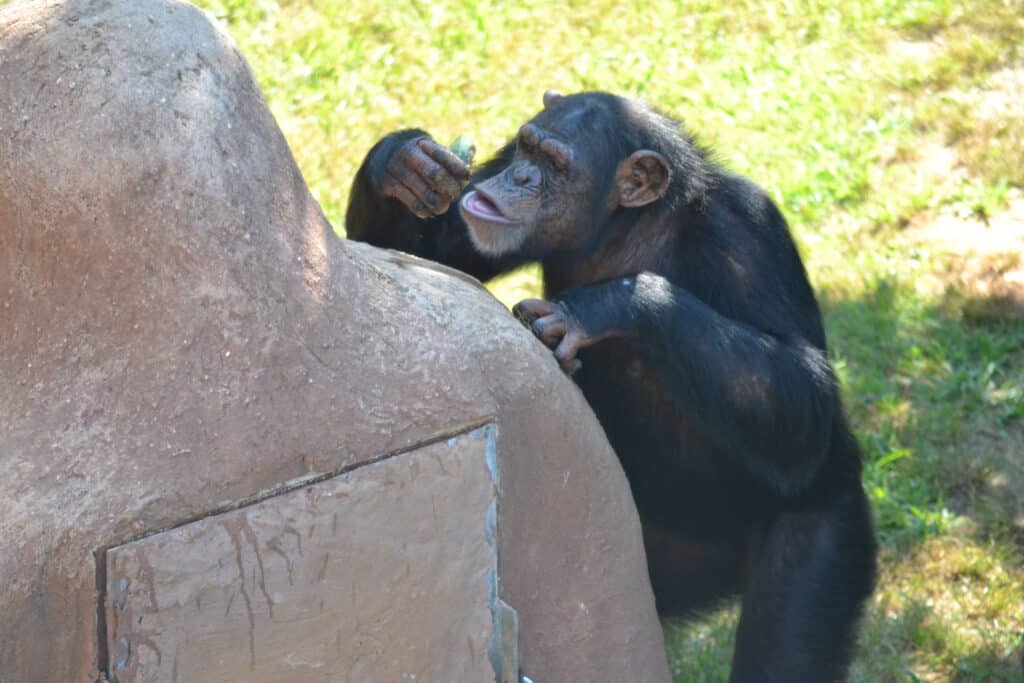
Jane Goodall famously observed chimpanzees using sticks to “fish” for termites around 60 years ago. They strip the leaves from sticks to puncture termite mounds and then eat the insects off the stick. Chimps eat insects for protein, so they don’t just use this method on termites, but ants as well.
What’s even more intriguing is that chimpanzees will modify a stick to have a frayed end. They’ll use one stick for puncturing, and one modified frayed stick for catching. This demonstrates chimps’ ability to utilize a toolkit.
Chimps will also fish for algae, but it’s mostly been observed in Bossou and Bakoun, both in Guinea. Bakoun chimpanzees use woody tools (sticks, branches, twigs) to fish for green algae in rivers, streams, and ponds. Bossou chimpanzees use herbaceous tools (leaves, grasses, stems, vines) to scoop algae from the surface of the water. A resourceful method for getting their fiber!
The Honey Dipper
Chimpanzee tool use makes foraging in general easier, like using sticks as probes for extracting honey, a very common occurrence for chimps across Africa. In Cantanhez National Park (CNP), Guinea-Bissau, chimpanzees were first observed honey dipping, where they use sticks or leaves to get the honey from the hives.
But is it really worth the risk of being stung? Yes, honey is a tasty treat, and the risk is mitigated with the type of tool they utilize. Chimps use pounders and short probes for stingless bee hives and very long tools when dealing with the aggressive African honeybees.
Chimps will modify their honey dippers just like the sticks for catching termites by chewing on one end to make a “brushed” tip. This makes the honey dipper way better at collecting the honey. Yum!
The Shovel
Chimpanzees will also dig for their honey, though it’s only been observed in Central Africa and Uganda. They use digging sticks to penetrate stingless bee nests, and then may use another stick as a honey dipper once they’re in.
Chimpanzees will also dig for tubers and roots. In Ugalla Tanzania, chimps use sticks, log pieces, and bark to crack the hard crust of the earth and get to the goods.
The Nut Cracker
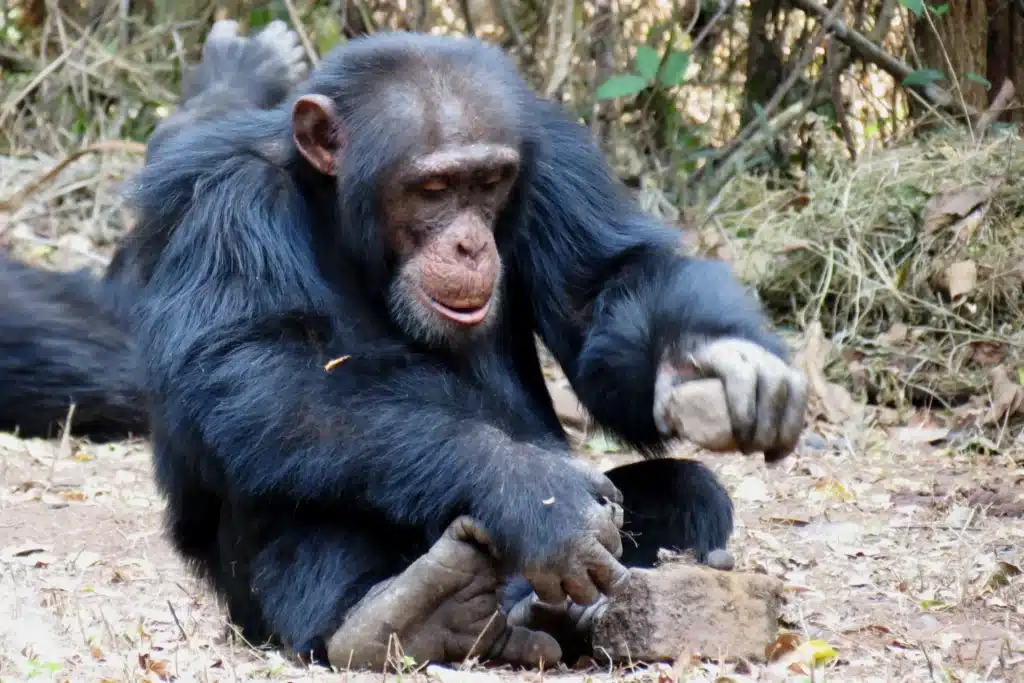
Another common tool use behavior is that chimpanzees wield stones and tree branches to crack open nuts. Guinea-Bossou chimps use stone hammers and anvils to crack open oil palm nuts. Interestingly, the evidence suggests these Bossou chimps learned that behavior from watching humans.
On the other hand, chimp populations elsewhere use much heavier stones in more varied ways to crack open harder types of nuts. These chimpanzees range from the Southeastern tip of Sierra Leon to the Southwest part of the Ivory Coast, and they use their anvils and hammers in a very precise and practiced manner.
The Sponge
Using leaves or moss to absorb and drink water is a common chimpanzee tool use behavior. They wad up leaves or moss, dip them in water, and then chew them to create a sponge. Sonso chimpanzees have been observed learning this behavior in action. The chimps picked up the sponging skill very quickly, demonstrating their remarkable ability to adopt new tools into their repertoire.
Dipping sticks are also a type of sponge. Just like how chimps modify sticks for eating insects and honey, some chimpanzees chew the end of a stick to turn it into a soft, water absorbing brush. They use it to collect water from narrow deep tree holes, and it’s only been observed in the Ivory Coast. As such, they share a unique culture involving water!
Sponges aren’t just used in the wild, because sanctuary chimpanzees are just as smart. At Project Chimps, Lindsey has also used a sponge in the form of a chimp chow bag to soak up juice.
The Spear
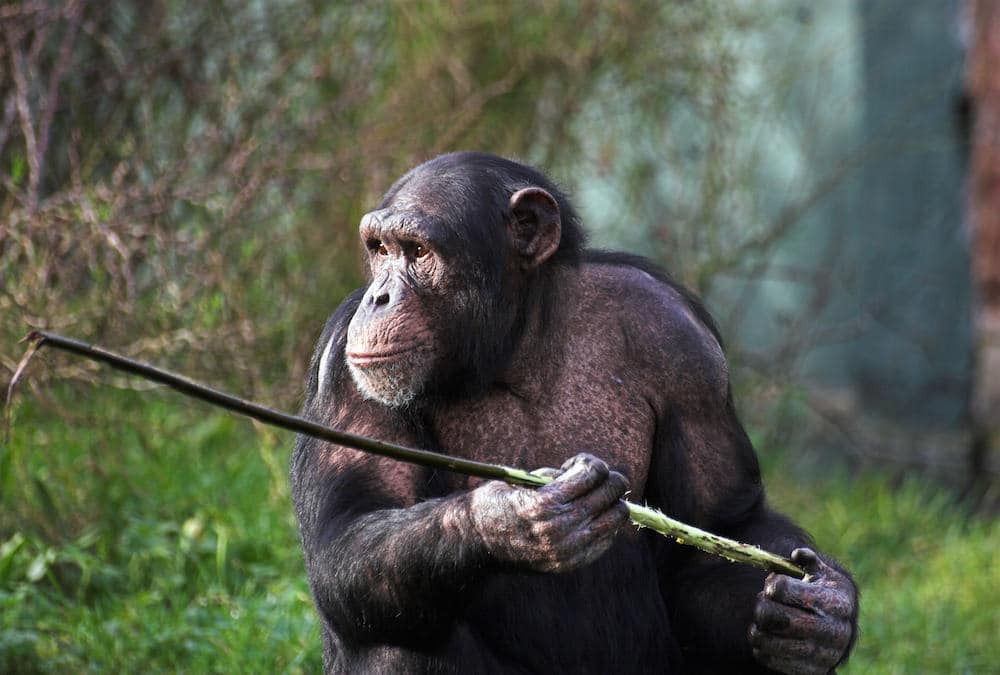
If you thought only our human ancestors made spears, you would be mistaken, because chimpanzees have been observed in the Fongoli savanna of Senegal sharpening sticks with their teeth to hunt small animals. After making the spear, they go up to a tree hole, and then stab it in. If they were lucky, they would get a bush baby, which only happened in about 5% of the attempts.
Interestingly, the juveniles were the ones observed the most in participating in this innovation. Perhaps because they were creating a hunting niche for themselves to compete with the grown males.
The Weaponry
A more common occurrence of chimpanzee weapon usage is the club and the throwing stick. While less common than biting or hitting, chimpanzees have been observed using sticks as clubs when fighting other animals or rival chimpanzees. Males will throw sticks, branches, and rocks as a warning. For infants and some juveniles, throwing things is a form of play, and at the sanctuary some chimps use sticks or other objects as tools during displays. This goes to show tool use is for more than just hunting and gathering, it is part of almost every aspect of a chimp’s life.
The Napkin
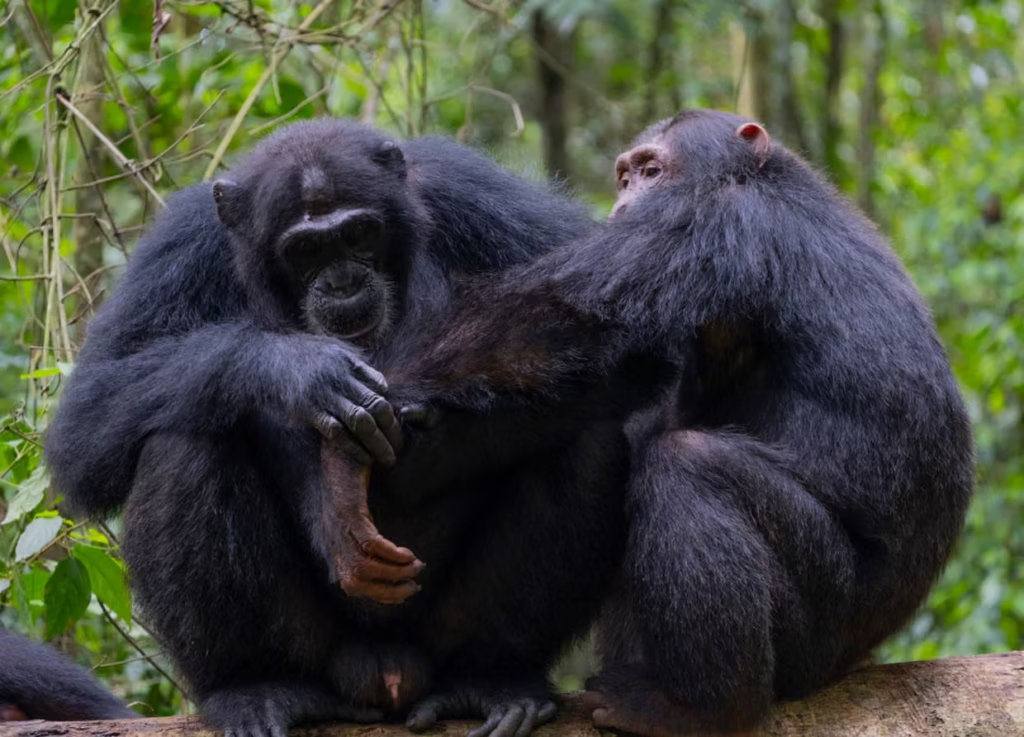
Chimpanzees tool use includes personal hygiene. They will use leaves to clean themselves after defecating, after having sex, and after being wounded. Chimpanzees dab their cuts with leaves to wipe away blood, and then directly apply insects or chewed medicinal plants to themselves and those they care for. Isn’t that mind blowing? Humans aren’t the only ones to practice healthcare, and the chimpanzee is the perfect example of this.
The Purse
Chimpanzees making and using any type of bag or carrying tool has not been observed in the wild, but it has been observed in one chimpanzee at Project Chimps – Panielle. This chimp tore her own blanket into strips to fashion a purse. Then, Panielle attached the blanket pieces to a stick she would keep in her armpit, so that she could carry her blanket while keeping all her limbs free. Smart girl.
The Sanctuary
Chimpanzee tool use is everywhere, not just in the wild, as Panielle has shown us. Their remarkable tool kit, and diverse behavior with tools is something we have in common with our chimpanzee relatives.
Embracing this connection is a wonderful experience, which you can do by booking a tour, and seeing these amazing intelligent creatures for yourself.