Nature Walk at Project Chimps
By Morgan Kelly
When you hear “Project Chimps,” you probably don’t think of bees, right? Or geese? You think of chimpanzees. But chimps aren’t the only critters here at the sanctuary!
If you’re ever on a hike here in Morganton, Georgia, you might see deer, wild turkeys, or even a bear. Chimps are obviously the most popular here but there are other critters that call the sanctuary home. Bees, geese, and deer are just as important to sanctuary life as the chimps themselves! Let’s go on a quick nature walk and see what we encounter.
First Stop on the Nature Walk: Geese
The chimps are here year-round, but some visitors only stay with us during the warmer months. The first critters you’ll probably spot on a nature walk through the sanctuary are geese. There are tons of them in the spring and the summer having returned from their vacations down south!
Geese can help the environment by spreading seeds and nutrients. When they eat seeds in one place, they’ll naturally disperse them through waste in another. This increases biodiversity across a wide area, especially because geese can fly long distances!
Staff have recently spotted a mother goose sitting on her nest. We’re not sure how many baby geese will be joining us in the coming weeks but we’re excited to meet them!
Second Stop on the Nature Walk: Bees
We love all the helpful creatures around the sanctuary but our little pollinators are the bees’ knees!
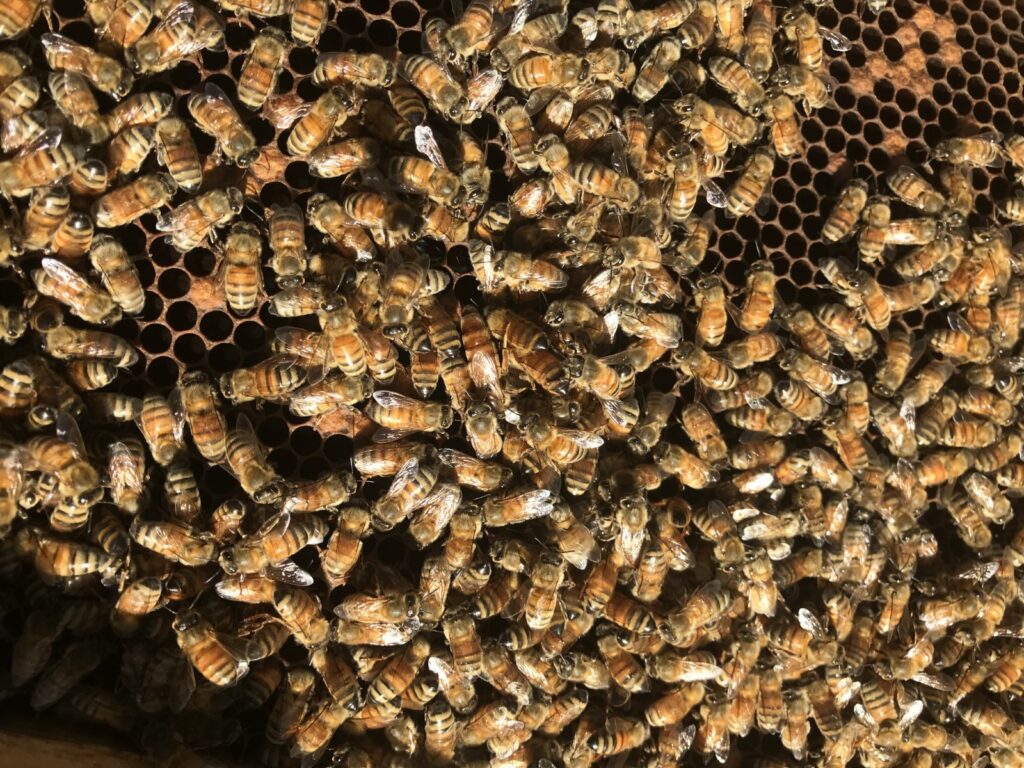
Bees are vital to the ecosystem at Project Chimps (and everywhere, really). They cultivate the surrounding vegetation through pollination and beekeeping increases the local bee population! Two of our wonderful volunteers started the apiary at the sanctuary about six years ago and now we use any extra honey for chimp enrichment and medicine.
We currently have four active beehives, three of which are of the Langstroth variety. Langstroth hives are a bunch of rectangular wooden boxes stacked on top of each other. The bees can grow their colony and hive throughout the structure. You might think it would be hard to reach all the way down to the bottom of a tall tower of hives — and you’d be right — but the wooden boxes are removable so staff can easily examine each section when appropriate. Although we only have four beehives we maintain regularly, there are multiple around the sanctuary for wild mason bees as well. Each of the four hives is mostly self-sufficient but a committee of staff and volunteers also check in regularly. Team Vermillion Supervisor Jesse Ellsworth and volunteer Joseph Dufresne coordinate and oversee all committee operations.
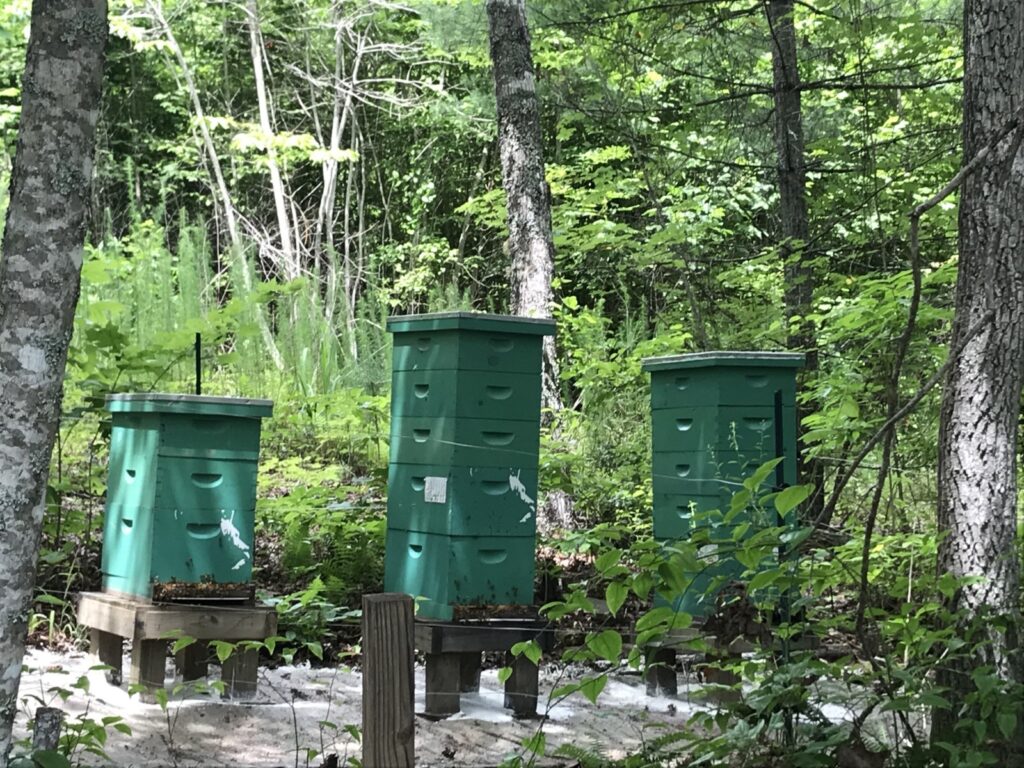
Every week, members of the apiary committee check on the hives to make sure they’re healthy. Sidney Westfall is one of the committee members who just got her bee suit in March! Sidney explains that they look for four main things when they check on the hives: monitor the queen, check for any pests, assess maintenance needs, and evaluate the colony’s progress.
Bees have the important job of pollinating local flowers and plants, especially at the sanctuary. And they’ll be even busier bees when we finish planting the fruits and veggies in our new Earthsong Garden! We’re so grateful for everything they do for the environment.
Third Stop on the Nature Walk: Deer
If you’re lucky, you may spot a deer or two hiding around the sanctuary. They rarely hang out around humans due to their shy nature, but you’re likely to encounter a group at night because there are less humans out and about. Since our trails are closed from sunrise to sunset, we don’t see deer very often but, make no mistake, they’re out there as we’ve heard some fun anecdotes from hikers and staff members alike!
One morning, an employee arrived at the sanctuary to start their shift. As they were walking through the sanctuary, they found a fawn hiding by a popular walking area!
We took necessary steps so we wouldn’t spook or hurt the fawn and ensured everyone knew where it was to steer clear of it. After an eventful morning, the mother deer eventually returned to reclaim their baby.
Fourth Stop on the Nature Walk: Visit to Find Out!
There are so many creatures in the Blue Ridge Mountains and around the sanctuary. So many that you could never see them all in just one visit! Come take a nature walk in person on one of our four hiking trails to see some of these critters yourself. Our hiking trails are open from dawn to dusk and vary in difficulty. Remember, keep that curiosity but always be kind and respectful to wildlife by maintaining an appropriate distance! We love all animals here at Project Chimps, not just the primate kind.
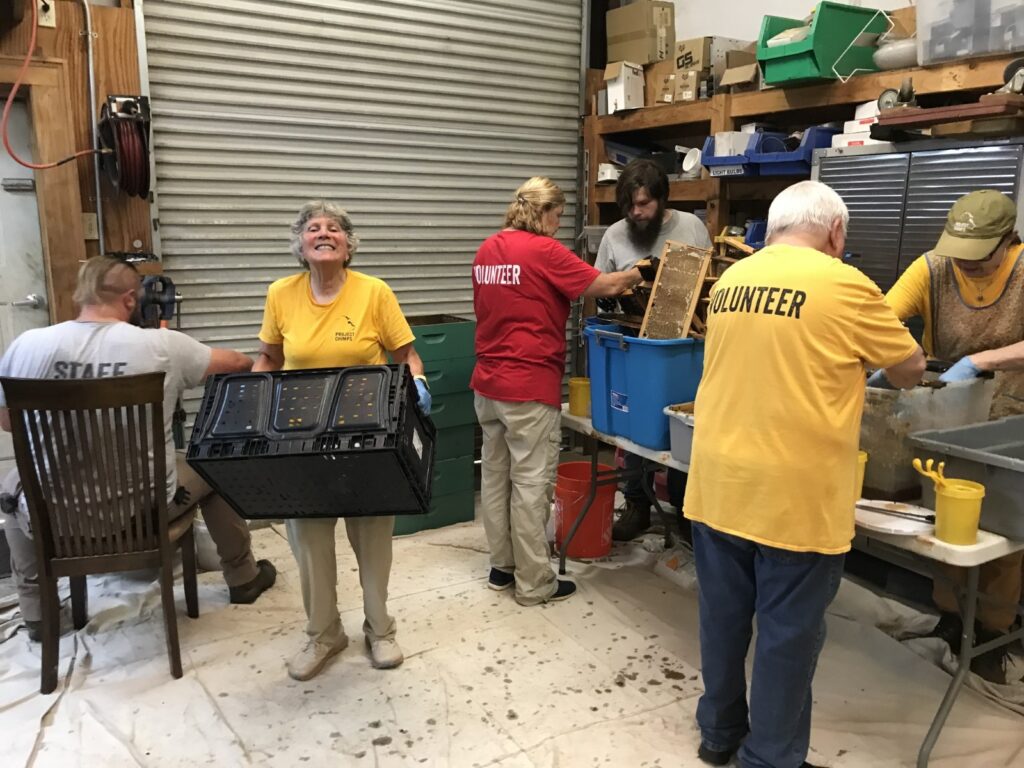
Interested in volunteering as part of the apiary committee or another committee? Apply to volunteer online!