Exploring Chimp Life Stages

Have you ever wondered how chimp life stages compare to our human ones? Project Chimps is a sanctuary dedicated to caring for chimpanzees retired from biomedical research. Today, nearly all of our residents are fully mature, adult chimps (although they sometimes might not act like it).
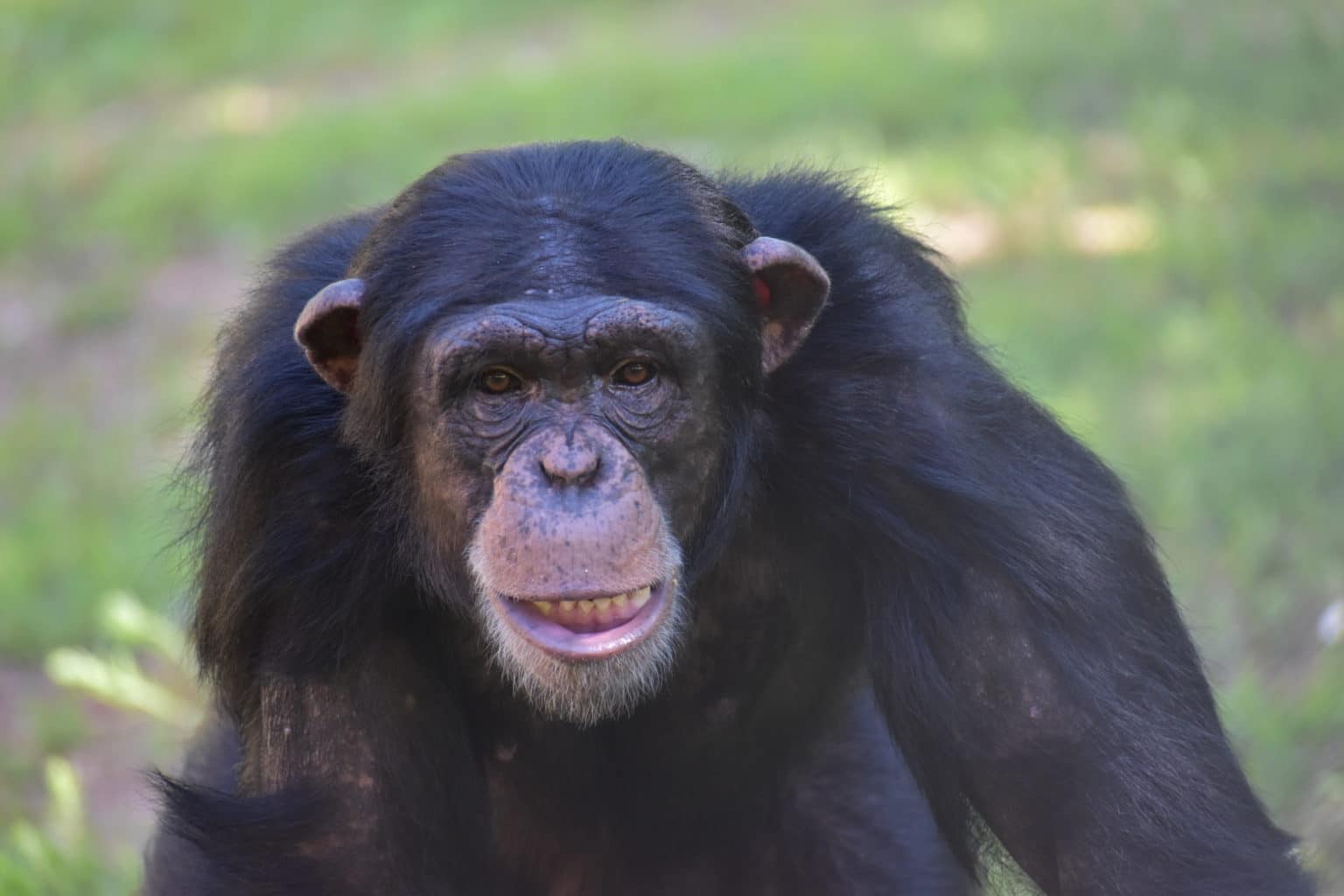
Indeed, our youngest resident, Kivuli, is currently the only chimpanzee at the sanctuary still in adolescence at just 15 years old. Come January, Kivuli will be turning 16 and joining his fellow residents in adulthood as male chimpanzees are generally considered fully mature at this age.
Growing Up Chimp-y
As we approach this milestone birthday, you might be wondering what it means to be an adult chimp, how it’s different from other chimp life stages, and why it takes so long to get there. After all, chimps have one of the longest childhoods of any non-human primate.
The answer is quite simple—it means growing into your full chimp potential! And this takes time.
Chimp life stages are not just a matter of growing taller and getting stronger. Chimpanzees are very intelligent and social animals. In the wild, they form communities which have their own culture, tools, and social structures. Chimpanzees must understand all these things to be part of those communities, which means from the moment they’re born, they have a lot of learning to do.
For our exploration into chimp life stages, we will be focusing on the typical experiences of chimpanzees in the wild. Since all our residents were born in biomedical research labs, many of them were raised away from their mothers, like Kareem, whose story you can read here. While their experiences may be different, these are the physical changes that affected their growing bodies and helped them become the chimps we know today.
Infant (Birth – 5 Years Old)
Infancy is the first of the chimp life stages, and the most fragile. When a chimp is first born, they are completely helpless. They can’t move, feed, or defend themselves on their own. So, they rely entirely on their mother for warmth, safety, and milk.
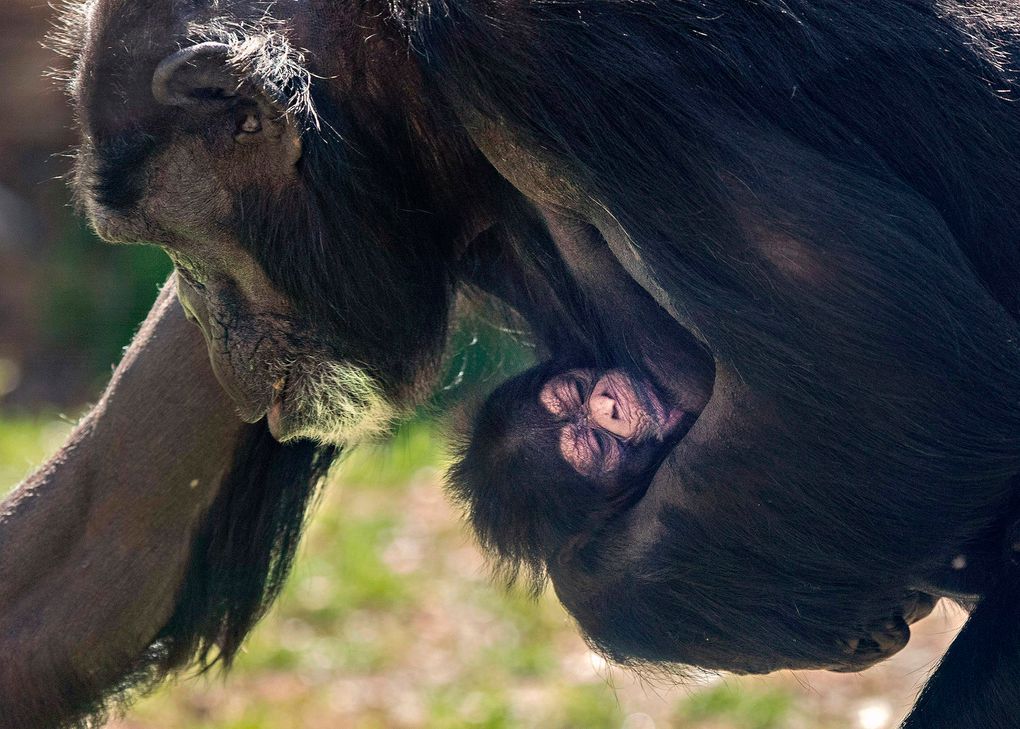
Being a momma chimp to a newborn is a full-time job. For the first few months of a chimp’s life, their mother holds them constantly as she eats, sleeps, and travels.
It isn’t until around six months to a year that infant chimps start to experience the world around them (with mom’s help, of course). Around this time, baby chimps will start to ride on their mother’s backs, rather than their fronts, and take their first steps, all under their mother’s careful supervision. By the end of this first year, they might even sample some solid foods!
This is the start of a chimp’s education which they will continue throughout their childhood. Between the ages 2 to 5, baby chimps spend a lot of time watching other chimps. They’ll watch what they eat, how they use tools, and how they interact with one another. This gives them an idea of how to behave in the community and its social hierarchy.
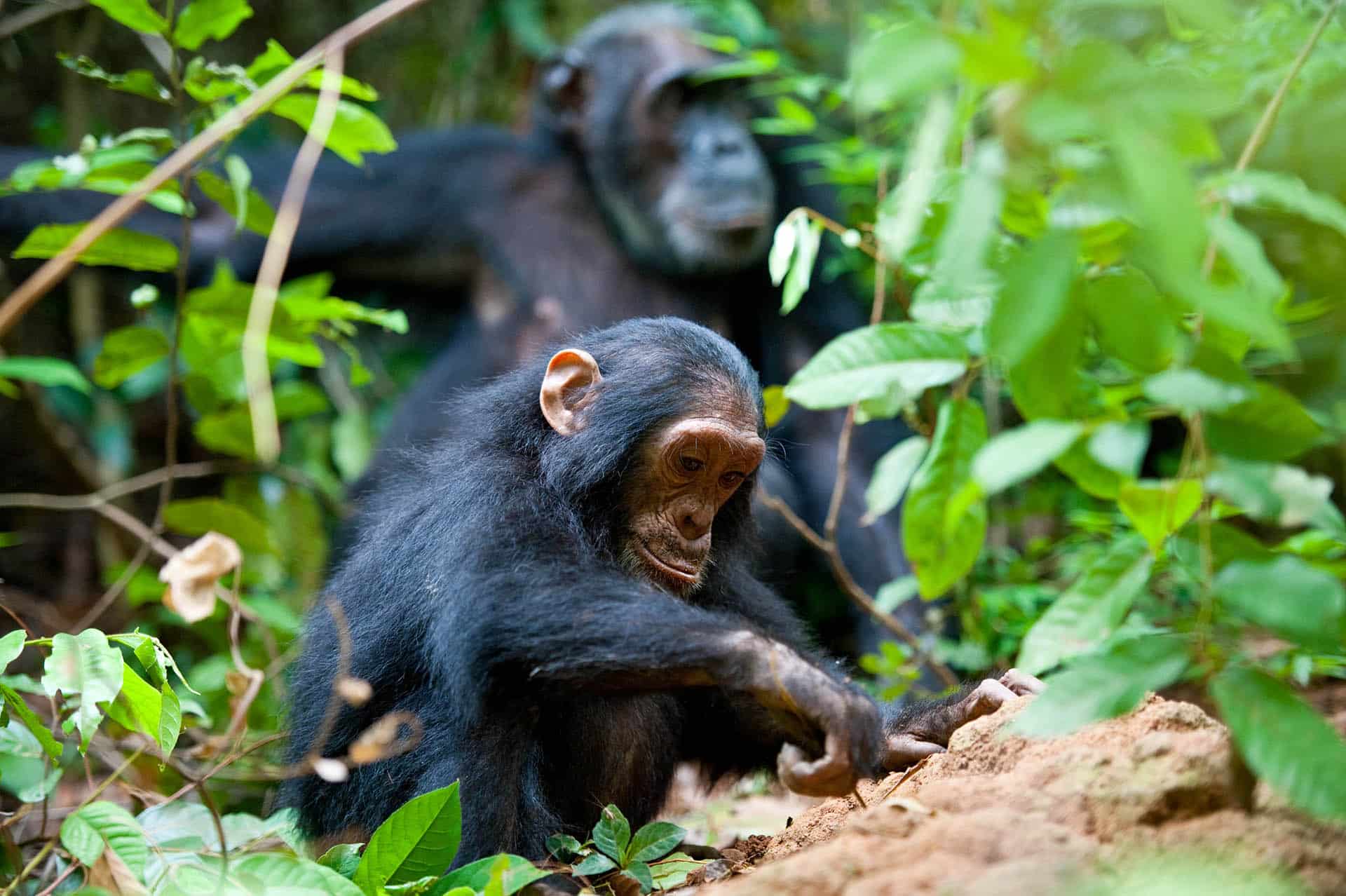
The baby chimps are still with their mothers during this time who provide them with protection and milk. With these basic needs met, infants can play, explore, and make mistakes as they practice how to be a chimp. Learning how to use tools, such as a rock to crack open nuts, or a stick to fish termites out of their mounds, can take chimps years to master!
Juvenile (5 – 8 Years Old)
By the time a chimp is five years old, they enter the second of the main chimp life stages and become juveniles.
At this point in their lives, chimps have weaned off their mother’s milk and switched to solid foods. Also around this age, juvenile chimps tend to lose the white tuft of fur on their behind they’ve had since birth.
They are far more capable now and use their new strength to explore the social circles of their community.
For males, this often means play-fighting, which helps prepare them for establishing their place in the social hierarchy as they age. As male chimpanzees often stay with the same social group for life, the friendships they make while they’re young are very valuable in the long-term.
Female chimps also play, though researchers have observed differences in overall play style compared to male chimpanzees. Female chimps are more likely to practice carrying things for example, which may help prepare them for parenting. And for young chimps in the wild, their mothers are often play partners!
Early Adolescence
Early adolescence is when the chimps begin puberty.
At this point, they have weaned off their mothers’ care and can survive entirely on their own, but they often choose to remain near their mothers regardless. Indeed, the relationship a chimp has with their mother can last their whole life, likely because of how dependent they were on her care during their childhood.
For female chimps, this stage typically lasts from ages 8 to 10, and 8 to 12 for males.
Late Adolescence
Late adolescence begins when the chimp finishes going through puberty and lasts until they are fully grown.
Female chimps typically reach this milestone between the ages of 10 and 13 years old, whereas males usually reach it between 12 and 15.
Late adolescence is one of the most intense chimp life stages, as it is a time of great change, especially for females. After gaining the ability to reproduce, most female chimps choose to leave their original community to join a different group.
Adolescent chimps spend much of their time forming and strengthening relationships with their groupmates as they prepare to be full-fledged members of their communities. They will perform affiliative behaviors such as grooming, playing with, and reassuring their fellow chimps to help build strong friendships.
Having these relationships not only makes a chimp feel comfortable in their community, but also raises their social standing. If a chimp is ever in trouble, they can call on their friends for help. This becomes very important for establishing their position in the social hierarchy. If a chimp has strong friends backing them up, chances are the other chimps won’t mess with them!
Adulthood (16+ Years Old)
Finally, after all those changes, chimps typically find stability by the time they reach 16 years old. At this point, they will have settled into the social order of their group and are fully grown.
For reference, fully-grown chimpanzees tend to be between 3-5 feet tall, with arms that are about 1.5 times their height. Males are generally bigger than females, on average weighing between 74-155 lbs compared to 57-110 lbs for females.
Retirement
For most of the chimps enjoying sanctuary life, they are done going through the chimp life stages. But this does not mean they’ve finished learning!
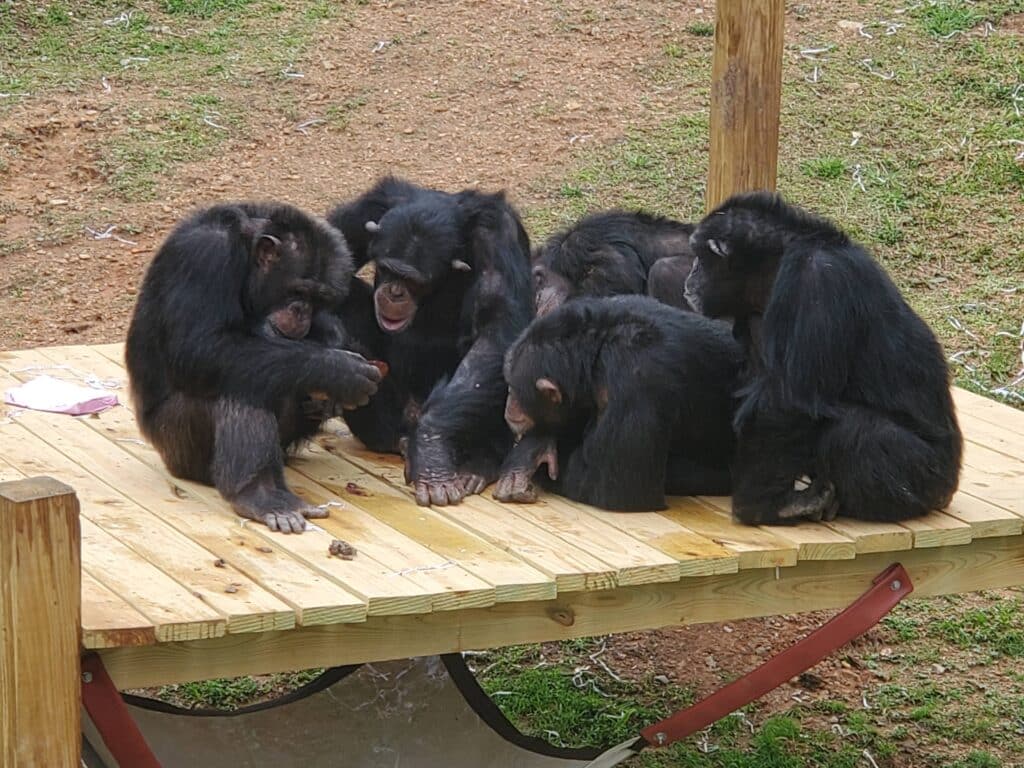
Just like it is for us humans, each day presents the chimps with new challenges and experiences. Through enrichment items such as puzzle boxes, new play structures, visiting tour groups, or changing friendship dynamics with their groupmates, the chimps continue to learn and grow!
The mean life expectancy for a chimp in captivity is about 32.5 years for males and 40.1 for females. Which means they have a lot of life to live!
Life-Long Friends
With your generous support, we strive to make each day a great one for the chimps. Whether it be by sponsoring a chimp, purchasing a treat for the chimps off our wish list, or sending a monetary donation, any and all support you give makes far-reaching, positive differences in the lives of our residents.
Thank you for all of your support throughout the years! With your kindness, we can be sure that great days are ahead.