The Real Story of Primate: Fact vs Fiction
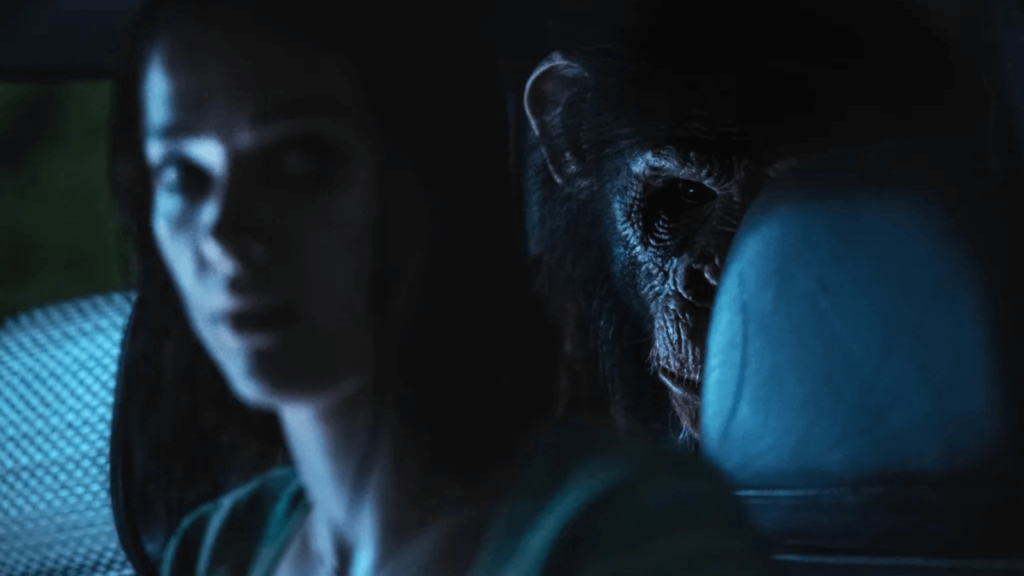
While Primate (2026) was not based on a true story, how much of it could really happen? Can chimpanzees get rabies? Can you own a pet chimp? Will a chimp prowl after you the next time you visit a zoo or sanctuary with murderous intent? Find out the truth in this breakdown of Primate: fact vs fiction.
The Facts about Pet Chimpanzees
Let’s go over the legalities first: keeping a pet chimpanzee.
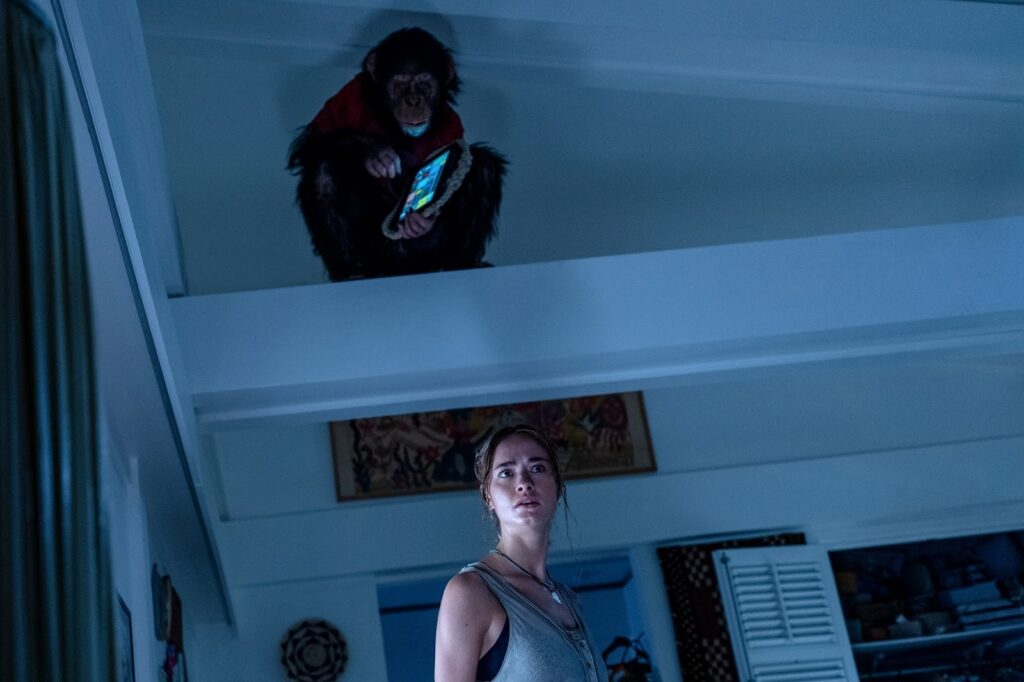
In Primate, Lucy’s mother was a linguistics professor who began fostering Ben to research human-chimpanzee communication. When she passed and was no longer able to continue her research, Lucy’s family kept Ben as a pet. At the start of the film, Ben acts as an intelligent ape with the personality of a toddler, lugging around plush toys and the tablet device he uses to communicate. But can a family really keep a pet chimpanzee this way in the United States?
Wild chimpanzees have been listed as endangered since 1990 under the Endangered Species Act (ESA) in the United States. However, ESA protections only applied to wild chimpanzees at the time, excluding chimpanzees kept in captivity (such as those living in research facilities) from full protections. Thankfully, this changed in 2015, and all chimpanzees were listed as endangered. It became more difficult for invasive research studies and private owners to acquire and keep them.
However, a few states still allow private primate ownership under certain criteria and the correct permits. Hawaii is not one of these. In fact, Hawaii’s laws on animal importation and ownership are so strict, Ben would normally not have been able to get on the islands, let alone be kept as a pet. There are loopholes to this, though. Because Ben was initially kept as a research chimp, he may have been able to legally enter the state with certain permits. Lucy’s family could have theoretically kept him afterwards under the radar.
The Killer Primate: Fact vs Fiction
You may see a baby chimp and think, “Aww, that little guy couldn’t hurt a fly.” But that couldn’t be further from the facts.
Chimps share more than just DNA with us. They share lifetimes. Chimpanzees reach maturation around the age of sixteen, meaning chimps have sixteen long years of learning social and survival skills from other chimpanzees. But as pets, this doesn’t happen. No natural habitat, no same-species playmates, no activities to encourage natural behavior? That is an ape primed with pent-up frustration.
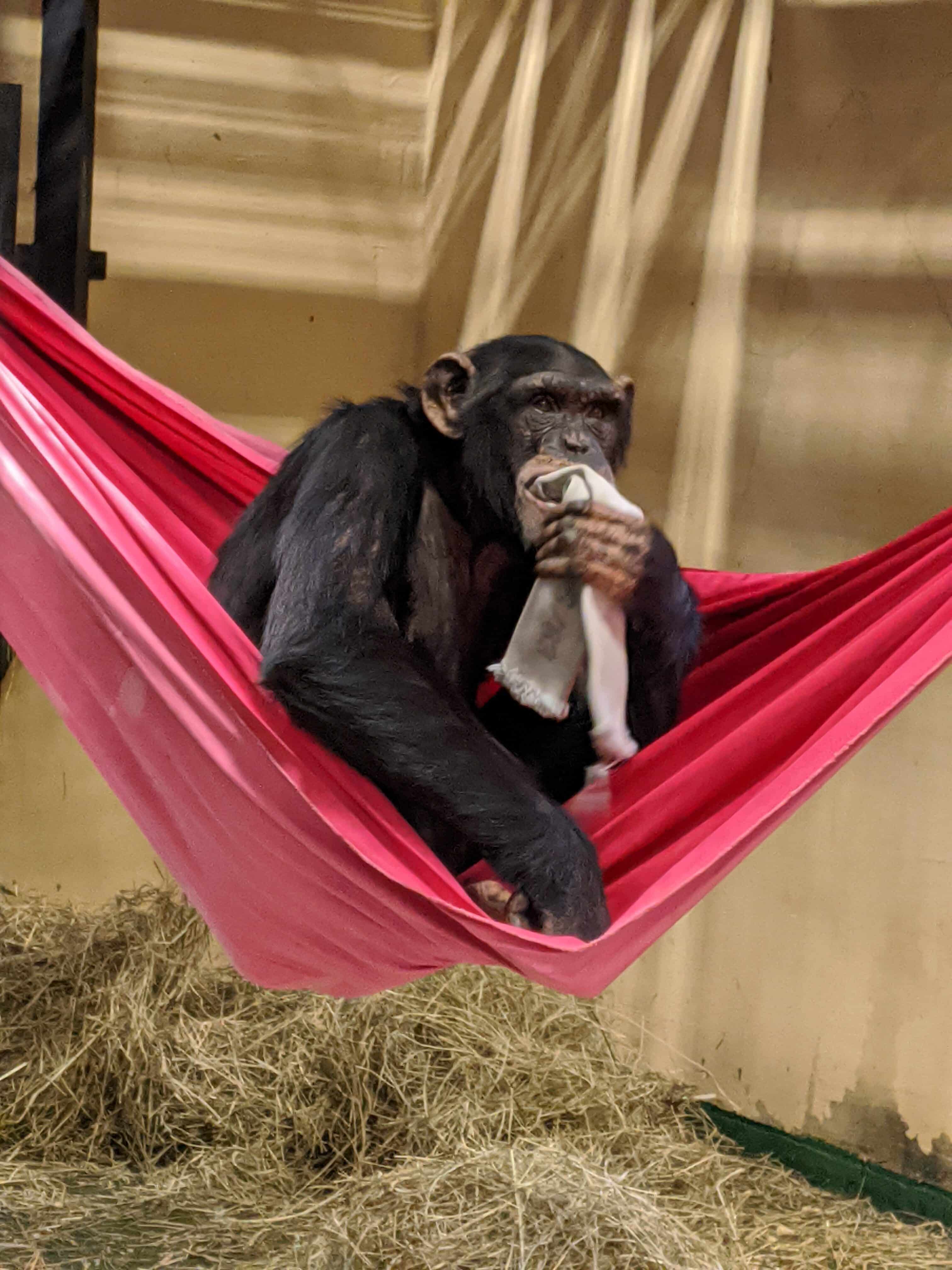
Pair this with their physical structure; chimpanzee muscle is 1.5 times denser than our own. The advantage of being brilliant climbers makes them much stronger than we are. They are capable of causing serious harm to humans, other animals, or themselves. It’s why sanctuaries like Project Chimps have safety protocols for interacting with residents, even the most playful ones like Haylee.
Unfortunately, injuries from chimpanzees and other non-human primates are a real danger that people don’t often consider until they happen. There have been many cases of severe and even life-threatening injuries caused by non-human primates kept in domestic environments, some of which may even have inspired films like Primate. It’s important to be aware of the dangers wild animals pose in domestic environments, as well as the truths cinema may stretch for entertainment.
Sharks are a good example of how media can influence public perception. Jaws’ portrayal of a massive killer shark changed public perception so much that wild shark populations declined after its release. That’s why we want to make it clear that Ben’s violence in the film was not natural chimpanzee behavior. It was an exaggerated display of aggression brought on by a rabies infection.
Rabies in Primate: Fact vs Fiction
What is rabies? According to the Center for Disease Control (CDC), rabies is a viral disease that attacks the brain and nervous system. Most forms of rabies occur within wildlife populations, like racoons, bats, and foxes, but other common carriers are dogs. The CDC’s statistics report that dogs are responsible for more than 95% of human deaths from the disease. Non-human primates rank second, as many exposure victims travel through natural habitats.
If you suspect you were bitten by a rabid animal, or any wild animal, immediately seek medical attention.
There are also some noticeable differences in how rabies is portrayed in Primate versus real life. The film hints at Ben’s infection early when he stares at the surface of a swimming pool with clear dislike. It implies hydrophobia, the fear of water, which is caused by rabies. While it’s true people and animals infected with rabies usually avoid water, that avoidance is usually specific to the act of swallowing. Because rabies affects the brain and nervous system, it can cause painful spasms of the throat that make swallowing difficult. This is partly why infected animals often appear to be foaming at the mouth.
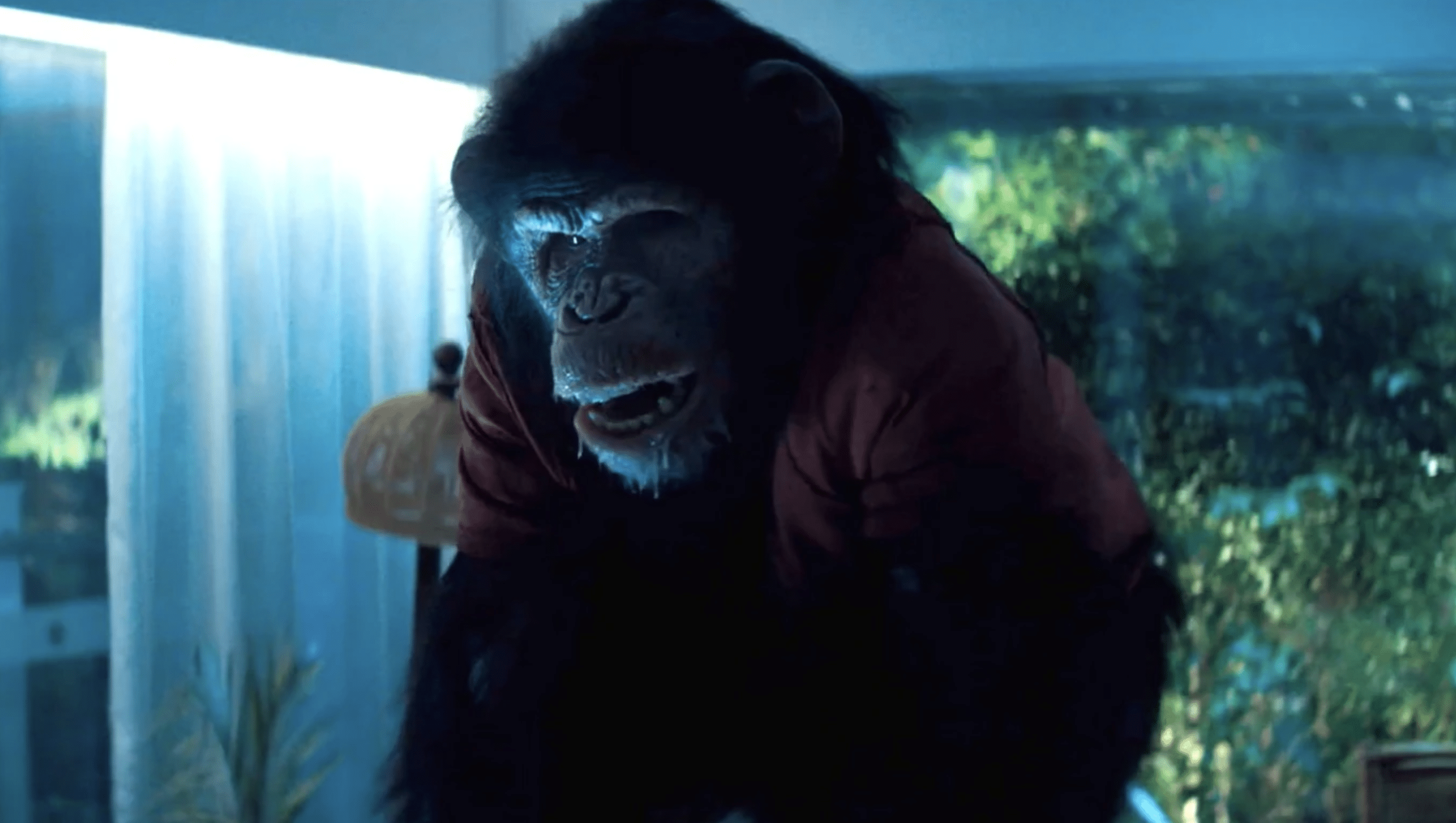
While rabies can lead those infected to act in erratic or unusual ways, it has never been documented to cause the calculated aggression seen in Primate.
A Disease of Fact and Ape of Fiction
The violence Ben displays in Primate is highly exaggerated for the sake of entertainment. Multiple scenes show Ben laughing after killing someone or seeming to take pleasure in his violence. He stays near the teens rather than running off into the forest surrounding the home, suggesting an obsession with killing the people he is nearest to.
Although rabies may cause volatile emotions, there have never been any reported cases of it causing a human or animal to viciously assault people in such a calculated manner. Even for an animal as intelligent as a chimpanzee, this level of targeted aggression is outside the documented symptoms of this disease.
Real chimp or not, as a fictional antagonist, Ben grasped our hearts and ripped them out within 90 minutes. At the end of the night, he was the victim of a fatal disease that wreaks havoc in the real world every day. It’s important to tell the difference between fiction strewn from threads of fact, and fact dressed as fiction.
Primate (2026) puts a creative twist on the classic slashers in horror, but one thing is for sure: our favorite chimps prefer lounging on hammocks over chasing teens into swimming pools!
Project Chimps is a nonprofit sanctuary dedicated to caring for former research chimpanzees. However, did you know one of the most searched phrases bringing people to our website is “rent a chimp?” If the fictional events in Primate weren’t enough to dissuade you or if you’d just like to learn more, check out this blog on the topic!